 blog
Bulk Nutrients vs Supplement Mart: Which Is Better?
Table of Contents
- Bulk Nutrients vs Supplement Mart: The Quick Verdict
- Bulk Nutrients Reviews: What Customers Say About Quality and Range
- Supplement Mart Reviews: Strengths, Weaknesses and Customer Feedback
- Bulk Nutrients vs Supplement Mart Prices: Cost per Serving and Value
- How to Compare Supplement Ingredients and Serving Sizes
- Shipping, Returns and Customer Support: Side-by-Side Comparison
- Which Retailer Fits Your Shopping Style?
- Conclusion
- Frequently Asked Questions
Last Updated: October 21, 2026
Bulk Nutrients vs Supplement Mart: The Quick Verdict
Bulk Nutrients vs Supplement Mart is a comparison most shoppers searching for value in sports supplements eventually make, and the short answer is that both retailers suit different habits. Bulk Nutrients leans on its own manufactured range and a no-frills ordering model. Supplement Mart stocks a broader mix of third-party brands. Neither is the automatic winner.
We watch how people actually buy supplements: they compare labels, check serving sizes, and work out cost per serve before committing. That is the right instinct.
Below, we break down reviews, pricing logic, ingredient checks and shipping side by side so you can pick with your eyes open. The key differences come down to range breadth, transparency and how much guidance you want.
Bulk Nutrients Reviews: What Customers Say About Quality and Range
Bulk Nutrients reviews tend to centre on consistency and price. Buyers describe repeat purchases of the same whey protein isolate or creatine, and they value that the range is largely made in-house, which keeps product quality steady between orders. The trade-off is range: it is a focused catalogue, not a supermarket of every brand.
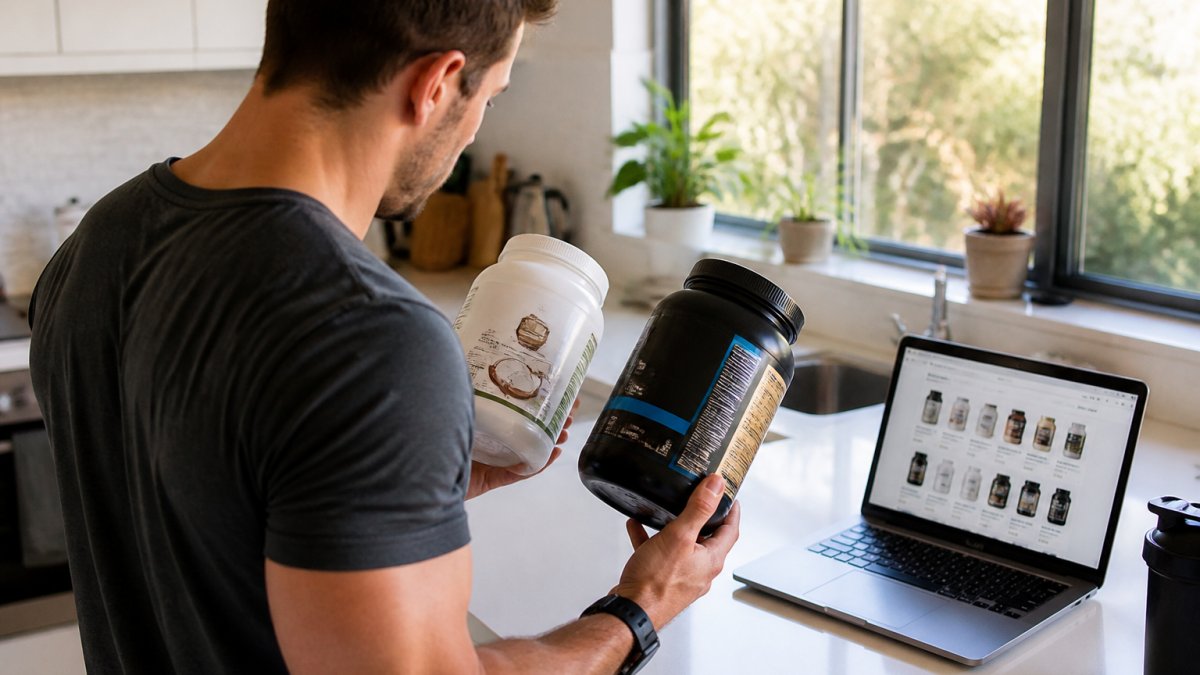
A common mistake is assuming a narrow range means lower quality. In practice, a smaller range often means tighter batch consistency and simpler ingredient transparency, because the retailer controls more of the supply chain. Check nutrition panels for serving size and protein per serve rather than trusting the front label.
Supplement Mart Reviews: Strengths, Weaknesses and Customer Feedback
Supplement Mart reviews point to breadth as the main draw. Shoppers like being able to compare brand-name products, pre-workout formulas and amino acid blends in one place, and availability of practitioner-style products is a plus for people managing specific health concerns. The weakness reviewers raise most is that a big catalogue can make choosing harder.
That is where serving size and nutrition information matter. A cheaper tub with a smaller scoop can cost more per serve than a pricier one. Compare the number of serves, not the sticker price.
- Strength: wide product range across brands and categories
- Strength: good availability of sports and wellness supplements
- Weakness: harder to compare like-for-like without reading labels closely
- Weakness: guidance varies, so new buyers may feel unsure what to choose
Bulk Nutrients vs Supplement Mart Prices: Cost per Serving and Value
Most comparisons of Bulk Nutrients vs Supplement Mart prices stop at the sticker price of a tub. That is the wrong number. The only figure that lets you compare fairly is cost per serving of active ingredient, and the only way to trust it is to work it out yourself from the current label and the current cart price.
Here is the method, worked through with a hypothetical example so you can see the arithmetic. Suppose Retailer A sells a 1 kg whey protein isolate tub for $59.95 with a 30 g scoop, giving roughly 33 serves. That is about $1.82 per serve.
| Step | What to do | Worked example |
|---|---|---|
| 1 | Note total serves per tub | 1 kg ÷ 30 g scoop ≈ 33 serves |
| 2 | Divide tub price by serves | $59.95 ÷ 33 ≈ $1.82 per serve |
| 3 | Check active grams per serve | 30 g scoop delivering ~25 g protein |
| 4 | Add shipping per order | $9.95 shipping ÷ 33 serves ≈ $0.30 per serve |
| 5 | Compare true cost per serve | $1.82 + $0.30 ≈ $2.12 per serve |
That last step is where most shoppers get caught. A capped shipping threshold only helps if your order clears it. If you buy one tub at a time, shipping can add 15-30 per cent to the effective cost per serve, which can wipe out the advantage of the cheaper tub.
Bulk Nutrients generally positions itself around bulk buying and its own manufactured range, which tends to keep cost per serve low on staple items like whey protein isolate, creatine monohydrate and oats.
A few practical rules keep the comparison honest:
- Compare the same category, not the same price. A $39.95 concentrate and a $79.95 isolate are not the same product.
- Check the scoop size, not the tub size. A 1 kg tub with a 25 g scoop has more serves than a 1 kg tub with a 40 g scoop.
- Read the nutrition information panel for protein or active ingredient grams per serve, not the front-of-pack claim.
- Add shipping before you decide. A $5 saving on the tub disappears if shipping is $10 more.
- Watch for multi-buy and subscription discounts, which can change the ranking of the two retailers entirely.
For a wider spread of discounted brands, My Health Pantry stocks premium and natural ranges at significantly discounted prices, which is worth weighing against both once you have calculated your own cost per serve.
How to Compare Supplement Ingredients and Serving Sizes
Comparing supplement ingredients and serving sizes is the single most useful skill in this decision. A label tells you the serving size, the active ingredient per serve, and the full ingredient list. Two tubs at the same price can differ hugely once you divide by serves. Calculating these ratios ensures you are paying for actual nutrition rather than filler, a principle that remains equally critical when evaluating personalised vitamin options for your specific health requirements.
Look for ingredient transparency: full disclosure of amounts, no proprietary blends hiding doses, and clear nutrition information. For protein powder, check protein grams per serve and whether it is whey protein isolate or a concentrate blend. For creatine and pre-workout, confirm the actual grams per scoop.
- Serving size and serves per tub noted
- Active ingredient grams per serve checked
- Full ingredient list read, not just the front label
- Product claims matched against the nutrition panel
- Cost per serve calculated
For broader guidance on label reading, the Food Standards Australia New Zealand labelling guidance explains what nutrition information panels must show.
Shipping, Returns and Customer Support: Side-by-Side Comparison
Shipping, returns and customer support are where two otherwise similar supplement retailers separate. The table below sets out what to check on each site and why it changes the true cost of an order, followed by the practical steps that resolve most problems.
| Factor | What to check on each site | Why it matters |
|---|---|---|
| Shipping cost | Flat rate vs weight-based, and the free-shipping threshold | A $10 shipping charge on a $60 order is a 17 per cent surcharge |
| Delivery time | Metro vs regional estimates, and dispatch cut-off time | A Friday afternoon order may not leave until Monday |
| Tracking | Whether tracking is included as standard | Untracked parcels are harder to resolve if lost |
| Packaging | Protective packaging for tubs and glass | Damaged tubs are the most common return reason |
| Returns window | Change-of-mind vs damaged-goods terms | Change-of-mind returns are often excluded for opened supplements |
| Refund method | Refund, store credit or replacement | Store credit is not the same as money back |
| Support channels | Email, phone, chat and response time | A slow channel turns a small issue into a long one |
A few patterns are worth knowing before you order from either retailer. Supplement tubs are heavy and bulky, so shipping is often calculated by weight rather than a flat rate, and a capped or free-shipping threshold may exclude oversized orders. Sealed supplements are also treated differently from opened ones under change-of-mind policies, because of food-safety and hygiene rules, once a tub is opened, a change-of-mind return is usually refused, while a damaged or faulty product should still be covered.
If an order arrives damaged, the sequence that resolves it fastest is:
- Photograph the parcel and the damaged tub before opening anything further.
- Check the retailer's damaged-goods policy and the returns window on its site.
- Contact support through the channel it lists for order issues, quoting your order number.
- Ask for a replacement or refund in writing, and keep the reply.
- If the issue is not resolved, escalate to the consumer affairs body in your state or territory.
Australian consumer law gives you statutory guarantees that sit on top of any retailer policy: goods must be of acceptable quality, fit for purpose and match the description. A retailer's returns policy cannot override those guarantees, so a damaged or faulty supplement is a consumer guarantee issue, not a favour. The ACCC consumer guarantees guidance explains what you are entitled to.
On support, the practical difference between the two retailers is usually channel and speed rather than policy wording. Before you order, note whether support is email-only or offers phone and chat, and check the stated response time. For a first order, that matters more than a few dollars of difference on the tub.
Which Retailer Fits Your Shopping Style?
Bulk Nutrients fits shoppers who know what they want and buy in volume: consistent product quality, a focused range, and straightforward value. Supplement Mart suits people who want to compare brand-name products across categories in one place.
If you want a middle path, My Health Pantry works directly with manufacturers to pass on savings, offering organic, natural and sports supplements with strict quality control. That combination of range and significantly discounted pricing suits shoppers who want value without a narrow catalogue.
Conclusion
Choosing between these two comes down to whether you value a tight, consistent range or a broad brand selection, and how carefully you compare cost per serving. Whichever you lean toward, check current prices, shipping terms and ingredient panels before you buy.
At My Health Pantry, we help you get more from your supplement budget with up to 50% off recommended retail prices, strict quality control and testing, and many organic, natural and sports brands. Visit The Shop to compare and start saving on your daily wellness essentials.
Frequently Asked Questions
Are Bulk Nutrients products high quality?
Bulk Nutrients manufactures many of its own products in Australia and publishes detailed nutrition panels and ingredient lists. Customer reviews often highlight consistent quality and fast dispatch. However, quality expectations vary by product, so check the specific ingredient panel and any third-party testing claims before buying. If you need practitioner-grade or certified organic options, compare the range at My Health Pantry, which stocks premium brands at discounted prices.
Which offers better value: Bulk Nutrients or Supplement Mart?
Value depends on what you buy. Bulk Nutrients tends to be competitive on large-format staples like whey protein isolate and creatine, where cost per serving is low. Supplement Mart may suit shoppers who want smaller tubs or a broader mix of brand-name products. To compare fairly, divide the pack price by the number of servings and check the protein or active ingredient content per serve. My Health Pantry offers up to 50% off manufacturer suggested retail prices on many brands, so it is worth checking there too.
How does Bulk Nutrients compare with Supplement Mart?
Bulk Nutrients focuses on its own manufactured range with a strong reputation for affordability and consistency, especially for protein powder and amino acids. Supplement Mart is a multi-brand retailer with a wider product range across sports nutrition and general health. The right choice depends on whether you prefer a focused house brand or a store that carries many brands. Both publish customer reviews and shipping information on their websites, so compare delivery times and return policies before ordering.
Can you buy Bulk Nutrients in store?
Bulk Nutrients primarily sells online through its own website, with dispatch from its facility. Some resellers may stock a limited range, but availability varies. If you prefer to buy from an online retailer that stocks multiple brands, My Health Pantry offers a wide range of sports supplements and organic products with everyday discounts. Always check the retailer's authenticity guarantees and return policy if you are buying from a reseller rather than directly.