 blog
How to Buy Discounted Sports Supplements Online
Last Updated: November 1, 2026
Quick Summary
You buy discounted sports supplements online by comparing cost per serve and cost per gram of active ingredient rather than the headline percentage off, then checking the discount against the manufacturer's suggested retail price. Verify the seller's supply chain, label and batch number, and compare carts on total checkout cost including delivery and returns.
- Divide the tub price by the serves listed on the label to normalise cost per serve.
- A 2 kg tub at $100 with 66 serves beats a 1 kg tub at $60 with 33 serves per serve.
- For protein, divide price by grams of protein per serve, not grams of powder.
- Buy larger tubs of unflavoured creatine monohydrate instead of flavoured blends with extras.
- Compare carts on subtotal plus delivery plus expected return cost, not subtotal alone.
Table of Contents
- Why Buying Discounted Sports Supplements Online Pays Off
- How to Compare Supplement Prices Without Getting Fooled
- How to Verify Supplement Quality and Authenticity Before You Buy
- Discount Protein Powder Online: What Actually Drives the Price Down
- Cheap Creatine Supplements: Where the Real Savings Are
- Free Shipping Supplements: How to Cut Your Total Checkout Cost
- Matching Discounts to Your Goals and Supplement Type
- Start Shopping the Discounted Sports Supplements Range
- Frequently Asked Questions
Why Buying Discounted Sports Supplements Online Pays Off
Buying discounted sports supplements online means paying less than full retail for the same protein, creatine and pre-workout products you would find on a gym shelf or in a health food store.
The catch is that "discount" means different things to different retailers. Some inflate a recommended retail price to make a markdown look bigger. Others quietly shrink the tub size. Below, we break down how to compare properly, verify what you're buying, and land the best total checkout cost rather than just the flashiest sticker.
How to Compare Supplement Prices Without Getting Fooled
Comparing supplement prices properly means calculating cost per serve, checking what the discount is measured against, and normalising pack sizes so you are comparing like with like. A big percentage off a bloated reference price is worth less than a modest markdown on an honest one. The method below turns a shelf of tubs into a single comparable number.
Step 1: Normalise to cost per serve
Divide the tub price by the number of serves listed on the label. A larger tub at a higher price often wins. A 27-serve protein tub and a 50-serve bag are not comparable until you do that division.
Worked example using round figures: a 1 kg tub at $60 with 33 serves works out to about $1.82 per serve; a 2 kg tub at $100 with 66 serves works out to about $1.52 per serve.
Step 2: Convert to cost per gram of active ingredient
For protein, divide the price by the grams of protein per serve, not the grams of powder. A 30 g scoop that delivers 24 g of protein is a different product from a 30 g scoop that delivers 20 g. For creatine, the maths is simpler because monohydrate is monohydrate: divide the tub price by the grams of creatine in the tub. This is the single number that lets you compare a flavoured blend against plain monohydrate fairly.
Step 3: Check what the discount is measured against
A genuine markdown references the manufacturer's suggested retail price. If a store never seems to sell anything at full price, the "sale" is the normal price wearing a costume. Check whether the discount is measured against the manufacturer's suggested retail price, and whether a retailer's deals run every day or only during promotional windows.
Step 4: Watch the pack-size shuffle
Retailers sometimes shrink the tub rather than cut the price. A 10% smaller tub at the same price is a 10% price rise dressed as a hold. Check the net weight and serve count on the label against the previous pack you bought, and compare cost per serve rather than cost per tub.
Step 5: Build a one-line comparison
For each candidate product, write down four numbers: pack price, serves per pack, cost per serve, and cost per gram of active ingredient. The product with the lowest cost per gram of active ingredient that still meets your quality and dietary requirements is the real winner. That is the comparison most sale pages never show you, and it is the fastest way to tell a genuine discount from a headline one.
How to Verify Supplement Quality and Authenticity Before You Buy
Verifying quality comes down to three things: the seller's supply chain, the label itself, and the batch information. Buy from retailers who can answer questions about a product's origin and sourcing. You can also browse the full supplements and vitamins range to check labels and batch details before ordering.
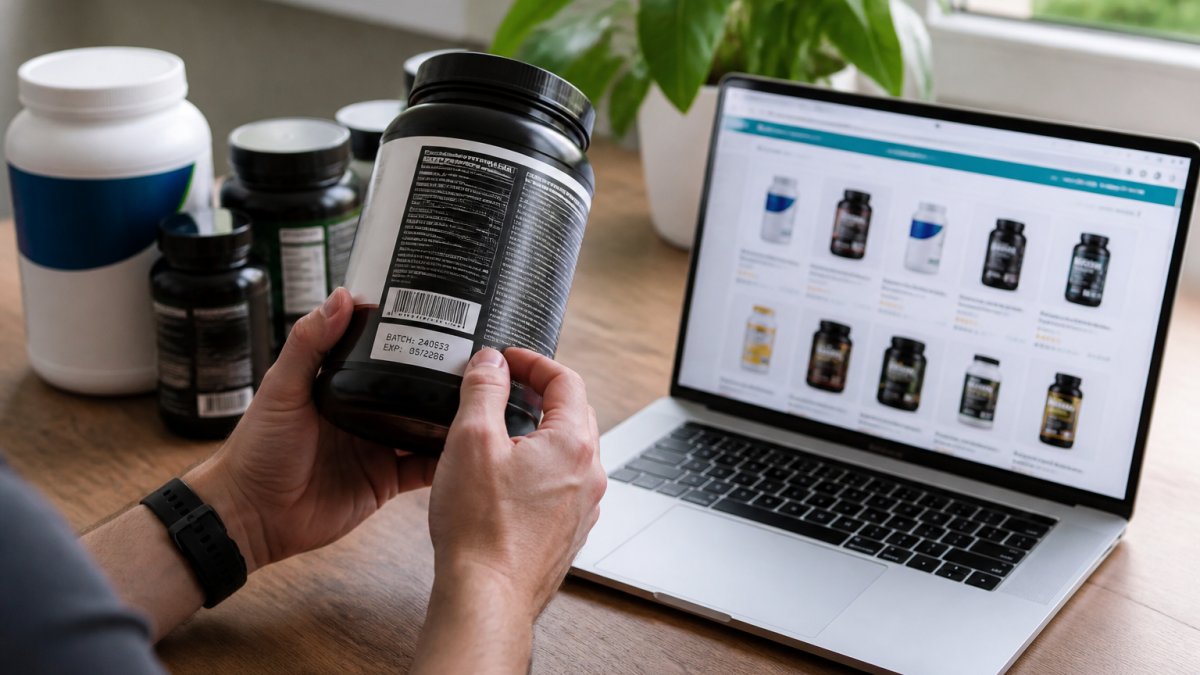
On the label, check for an Australian business address and a batch number, and confirm the ingredient panel matches what the brand publishes.
Discount Protein Powder Online: What Actually Drives the Price Down
Protein powder prices can fall for several reasons, including large-volume buying, short-dated stock, and clearance of discontinued flavours. The last two can be good value if you'll use the product before it expires.
Whey protein concentrate usually costs less than isolate, and plant-based blends sit somewhere between depending on the protein source. When comparing protein products, check the cost per gram of protein rather than per tub, and compare serve sizes across brands.
Cheap Creatine Supplements: Where the Real Savings Are
Creatine monohydrate is one of the most studied sports supplements available, and it's also one of the simplest. The value usually comes from buying larger tubs and choosing unflavoured monohydrate over flavoured blends.
Skip the pre-mixed "advanced" creatine products with added ingredients unless you specifically want them. You're paying for the extras, not the creatine.
Free Shipping Supplements: How to Cut Your Total Checkout Cost
Shipping can make a cheap cart more expensive than it first looks. A lower product price plus a delivery fee can easily lose to a slightly higher price with free delivery. The number that matters is the total at checkout, product subtotal plus delivery plus any return cost if the product is wrong for you, not the subtotal alone.
Build a total checkout cost, not a subtotal
For each cart you are considering, add up four lines: product subtotal, delivery charge, any payment surcharge, and the expected cost of returning an item if it does not suit. The cart with the lowest four-line total is the better buy, even if its subtotal is higher. This is the comparison most sale pages never show, and it is where a slightly dearer product with free delivery beats a cheaper one with a fee.
Use the free-shipping threshold deliberately
- Check the retailer's free shipping threshold, if it offers one, before you finalise your cart
- Group orders so one delivery covers several products
- Compare the delivered cost of a large tub against two smaller ones
- Factor in returns: bulky powders are awkward and costly to send back
If you are close to a free-shipping threshold, adding a genuinely useful item can push you over the line and cut the delivery charge on the whole order. That is arithmetic, not a sales pitch: run the numbers both ways before you pay. A $10 top-up that clears a $12 delivery fee is a $2 saving; a $30 top-up that clears the same fee is a $18 loss unless you would have bought the item anyway.
Compare delivered cost across cart configurations
A common pattern is that two smaller tubs delivered separately cost more than one larger tub delivered once, even when the per-tub price looks lower. Work out the delivered cost per serve for each configuration: (product price + delivery) divided by total serves. That single figure lets you compare a single large order against a split order fairly, and it exposes the cases where chasing a lower sticker price costs more at checkout.
Plan for returns before you order
Bulky powders and tubs are expensive to send back, and some categories are excluded from change-of-mind returns for hygiene reasons. Before you order a flavour or format you have not tried, check the retailer's returns policy for that category and factor the return cost into your four-line total. Buying a smaller size to test is often cheaper overall than buying a large tub and paying to return it.
Matching Discounts to Your Goals and Supplement Type
The best discount is the one on a product you'll actually finish. A heavily marked-down tub of a flavour you dislike is money wasted. Match the deal to the goal instead.
| Goal | Supplement type | Where the real savings sit |
|---|---|---|
| Muscle gain and recovery | Whey or plant protein, creatine | Large tubs, unflavoured formats, direct sourcing |
| Training energy | Pre-workout, high-stimulant pre-workout | Multipacks, discontinued flavours |
| Daily health | Vitamins, health supplements | Everyday low pricing rather than event sales |
| Hydration and endurance | Electrolytes, hydration products | Bundles that clear the free shipping threshold |
| Weight management | High-protein products, protein bars | Cost per gram of protein, not per unit |
For beginners, start with one protein and one creatine monohydrate. That covers the fundamentals, and it keeps your first order small enough to test what you like before buying in bulk.
Start Shopping the Discounted Sports Supplements Range
Ready to put this into practice? Start shopping the discounted sports supplements range. Start with the sports supplements you are considering and check each product's cost per serve against the alternatives. If you're also restocking daily essentials, compare the cost per serve of those products too.
Frequently Asked Questions
How can I tell whether an online sports supplement deal is good value?
Work out the cost per serve rather than the total tub price. Divide the pack price by the number of serves, then compare that figure across brands and pack sizes. Also check what the discount is measured against, since a saving off a recommended retail price is only meaningful if that price is realistic. Factor in delivery, because a cheap tub with a high shipping fee can cost more than a slightly dearer one with free delivery.
Are discounted sports supplements safe to buy online?
They are safer when you buy from a retailer that can tell you where its products come from and stores them correctly. Check that the listing shows the full ingredient panel, batch or lot number, and an Australian business address and contact details. Avoid marketplace listings with no seller information, prices far below everyone else, or packaging photos that look altered. If a deal looks impossible, treat it as a warning sign rather than a bargain.
How do I compare the total cost of supplements from different online shops?
Add up four things: the product price, any delivery charge, the cost per serve, and whether the retailer charges for returns. A store with a free shipping threshold can work out cheaper if you order enough to clear it, so group your protein, creatine and pre-workout into one order. Compare the landed cost of the same product and pack size before deciding which shop is genuinely cheaper.
How can I save on delivery when ordering supplements online?
Order in larger combined shipments where the retailer offers a free shipping threshold, and buy bigger pack sizes of staples like protein powder and creatine where the cost per serve drops.
The challenge is simple: most shoppers compare sticker prices and end up paying more per serve than they need to. We built My Health Pantry around everyday low pricing, with up to 50% off the manufacturer's suggested retail price, strict quality control and testing of products, and a wide range of organic, natural and sports supplement brands. Get started with My Health Pantry and pay less for the supplements you already use.