 blog
Buy Organic Protein Powder Australia Online: 2026 Guide
Table of Contents
- Why Buy Organic Protein Powder Online
- How to Find the Best Protein Powder for Your Goals
- Protein Powder Ingredients: What to Check Before You Buy
- How to Verify Organic Certification in Australia
- Affordable Vegan Protein Powder: Getting Value Per Serve
- Protein Powder Online Shopping: Delivery, Packaging and Authenticity
- Plant-Based vs Whey: Which Organic Protein Powder Suits You?
- Frequently Asked Questions
Last Updated: October 20, 2026
Why Buy Organic Protein Powder Online
Buying organic protein powder online in Australia gives you a wider range than any single store shelf, plus the ability to compare labels, certifications and price per serve before you spend a cent.
The catch is that "organic" is one of the most loosely used words in the supplement aisle. It is not a protected term in the way many shoppers assume.
Organic protein powder is a protein supplement made from ingredients grown and processed under certified organic standards, which restrict synthetic pesticides, herbicides and certain additives.
That distinction is the thread running through this guide.
How to Find the Best Protein Powder for Your Goals
The best protein powder is the one that matches your daily routine, dietary needs and budget, not the one with the loudest label. Most people overthink the brand and underthink the fit.
Match the Powder to Your Training and Daily Routine
Start with three honest questions: when will you drink it, what do you eat already, and what does your stomach tolerate?
- Post-workout only: a fast-absorbing isolate suits this best
- Breakfast or snack replacement: a blend with fibre and some carbohydrate keeps you fuller
- Daily habit for general wellness: flavour and mixability matter more than protein type, because you will actually finish the tub
A common mistake is buying a 2kg tub of a flavour you have never tried. Buy the smallest size first, confirm your gut is happy with it, then buy in bulk. Nobody warns you that a bad flavour turns a 40-serve tub into a 40-serve paperweight.
Protein Powder Ingredients: What to Check Before You Buy
Check protein content per serve first, then scan the ingredient list for fillers, added sugars and sweeteners you would rather avoid.
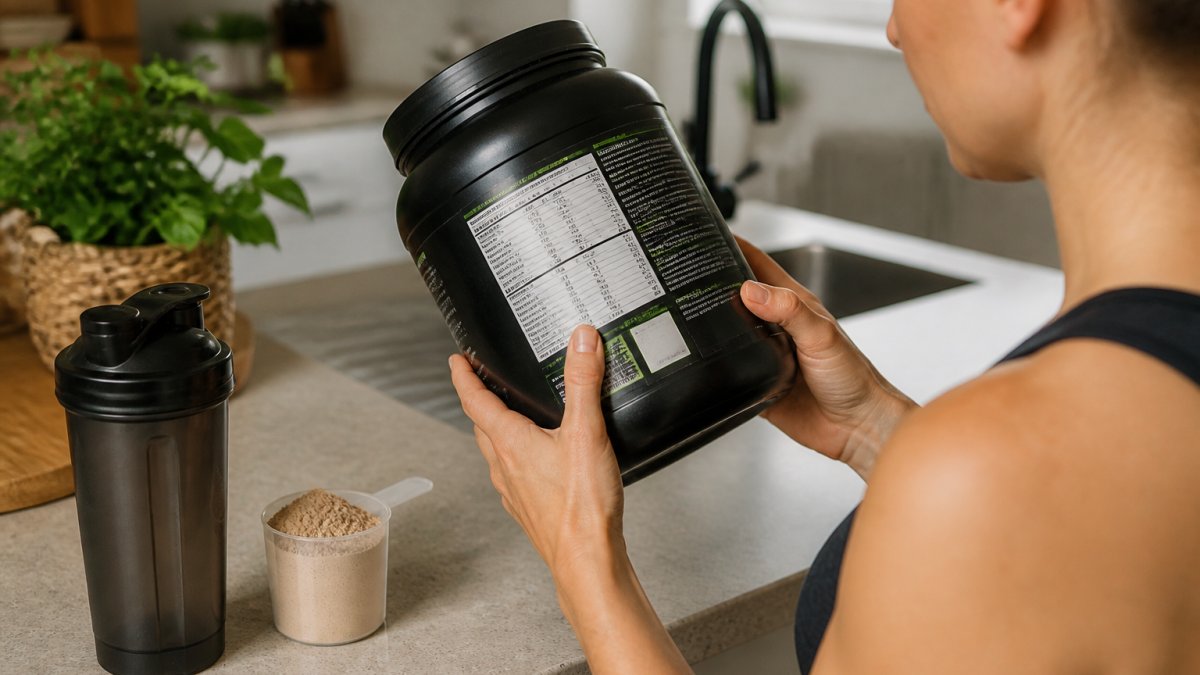
Protein Content, Serving Size and Amino Acids
Serving size is where labels get slippery. A tub might advertise "25g protein" against a 40g scoop, which is a solid ratio. Another might hit the same number with a 55g scoop, meaning you burn through the tub far faster.
Amino acids decide quality. Complete protein means the powder supplies all nine essential amino acids your body cannot make itself. Whey, egg and soy are complete.
Additives, Fillers and Sweeteners to Watch For
Scan for these before you commit to a tub:
- Maltodextrin and dextrose: cheap bulking carbohydrates that inflate scoop size
- Artificial sweeteners: sucralose and acesulfame potassium are common; some people notice digestive discomfort
- Gums and thickeners: xanthan and guar gum are usually harmless but add nothing nutritionally
How to Verify Organic Certification in Australia
Verify certification by finding a recognised certifier's logo and certification number on the packaging, then checking that number against the certifier's own online register. Australian organic claims are backed by private certifying bodies operating under a national standard, not by a single government-issued organic seal.
The standard behind the logo
The reference point is the National Standard for Organic and Bio-Dynamic Produce, administered by the Department of Agriculture, Fisheries and Forestry. It sets the production, processing, labelling and transport rules that certified operators must follow.
Established Australian certifiers you are likely to see on a protein powder tub include:
- Australian Certified Organic (ACO), the largest certifier by volume, run by Biological Farmers of Australia; its bud logo is the most common on retail supplements
- NASAA Certified Organic, long-standing certifier with a strong presence in plant-based and wholefood products
- Organic Food Chain (OFC), Queensland-based certifier used by a number of smaller supplement brands
Each issues a certification number tied to a specific operator and product scope. That scope matters: a business can be certified for, say, raw ingredients but not for the finished powder, so the number on the tub should match the product you are holding, not just the company name.
Step-by-step verification
- Identify the certifier logo on pack and note the certification number printed near it
- Go to that certifier's public register (ACO, NASAA and OFC all publish searchable lists)
- Search the number and confirm the operator name matches the brand on the label
- Check the certified product scope covers the exact SKU you are buying, not just a related line
- If the number cannot be found, contact the certifier directly before purchase
Imported certification and the local gap
Imported powders may carry a legitimate foreign certification, USDA Organic, EU Organic, or a certifier recognised under an equivalence arrangement. These are not fake, but they are harder to verify locally because the register sits overseas and the standard behind them differs from the Australian one. If a retailer cannot tell you which certifier signed off a product and under which standard, that is your answer.
Be aware of a genuine gap: organic certification for supplements and processed powders is not enforced the same way as for fresh produce, and the word "organic" is not a protected term in the way many shoppers assume. Australian Competition and Consumer Commission guidance on country of origin and product claims sets out what businesses can and cannot claim on packaging, and the ACCC has taken action against misleading "organic" and "natural" claims in the past.
Affordable Vegan Protein Powder: Getting Value Per Serve
Value per serve is the only fair way to compare an affordable vegan protein powder against a premium one. Divide the tub price by the number of serves, then divide again by grams of protein per serve to get cost per gram of protein.
Run the maths on any two tubs:
| What to compare | How to calculate | Why it matters |
|---|---|---|
| Cost per serve | Tub price ÷ serves per tub | Shows real cost of each shake |
| Cost per gram of protein | Cost per serve ÷ grams protein per serve | Compares across different scoop sizes |
| Cost per complete protein | Same, but only for blends with all essential amino acids | Stops you paying for incomplete protein |
| Serves after settling | Recheck scoop size against tub weight | Powder settles; scoops vary |
A worked example
Take two hypothetical tubs at the same shelf price of $79.99:
- Tub A: 1kg, 40g scoop, 30g protein per serve, 25 serves. Cost per serve = $3.20. Cost per gram of protein = $0.107.
- Tub B: 1kg, 55g scoop, 25g protein per serve, 18 serves. Cost per serve = $4.44. Cost per gram of protein = $0.178.
Tub B looks like the same product at the same price, but you are paying roughly 66% more per gram of protein because the scoop is larger and the protein density is lower. That is the trap the front-of-pack "25g protein" claim hides.
Why plant powders often cost more per serve
Plant-based powders frequently need a larger scoop to hit the same protein number as whey, which quietly raises cost per serve. A protein isolate made from pea or soy usually delivers more protein per gram of powder than a whole-food blend, so it often wins on value even at a higher shelf price.
Certified organic plant protein costs more to produce, certification fees, separate handling, and lower-yield organic farming all add cost, so expect a premium of roughly 20-40% over a comparable non-organic tub.
Sweeteners and fillers change the value equation
A cheap tub padded with maltodextrin or dextrose can look like good value per serve while delivering less protein per dollar. Check the ingredient list against the nutrition panel: if the carbohydrate number is high relative to protein, you are paying for filler. The same applies to "proprietary blends" that list ingredients without amounts, you cannot verify what you are getting, so value cannot be calculated at all.
Protein Powder Online Shopping: Delivery, Packaging and Authenticity
Authenticity is the number one concern we hear about protein powder online shopping, and it is a fair one. Counterfeit and expired stock does circulate through unofficial channels.
Protect yourself with four checks:
- Buy from established retailers with a traceable business presence and clear returns policy
- Check batch numbers and best-before dates the moment your parcel arrives
- Inspect seals before opening; a broken or re-taped seal is a red flag
- Confirm packaging condition on delivery and photograph any damage before signing
For packaging, powders ship best in rigid cartons with padding; a soft satchel alone offers little protection for a heavy tub.
At My Health Pantry, we source directly from manufacturers, which is how we keep prices down and stock traceable.
Plant-Based vs Whey: Which Organic Protein Powder Suits You?
Choose plant-based if you are vegan, dairy-free or sensitive to lactose. Choose whey if you tolerate dairy and want the most protein per dollar with a complete amino acid profile.
| Factor | Plant-based | Whey |
|---|---|---|
| Dairy-free | Yes | No |
| Complete protein | Only if blended | Naturally |
| Texture in water | Grittier, thicker | Smoother, thinner |
| Suits lactose intolerance | Yes | Usually not |
| Typical cost per gram of protein | Higher | Lower |
Whey remains the benchmark for muscle recovery because of its amino acid profile and absorption speed. Plant blends have closed much of the gap, particularly pea and rice combinations that cover each other's missing amino acids.
Dietary suitability is the deciding factor.
Frequently Asked Questions
How do I check whether a protein powder is certified organic?
Look for a certification mark from an Australian certifying body on the packaging, and check the certifier's own online register to confirm the product and the manufacturer are listed. Certification covers how ingredients are grown and processed, so a product claiming organic ingredients without a recognised mark has not been independently verified. If the label is unclear, ask the retailer for the certificate before you buy organic protein powder, and keep the batch details on file in case you need to follow up.
What is the difference between organic whey and plant-based protein powder?
Organic whey is a dairy protein, so it suits anyone who tolerates lactose and wants a complete protein with all essential amino acids. Plant-based options such as hemp, pea and rice blends are dairy-free and vegan-friendly, but you need to check whether the blend is complete or whether it combines complementary sources. Both can carry organic certification. Your choice comes down to dietary suitability, taste preference and how much protein per serve you need rather than which one is inherently better.
How can I compare the value of different protein powders?
Work out price per serve rather than price per tub. Divide the tub price by the number of serves listed on the label, then check the grams of protein in each serve. A larger pack with a bigger scoop can cost more per gram of protein than a smaller tub. Factor in delivery charges and any discounts too, since a cheaper sticker price with paid shipping can end up costing more than a store with free delivery on the same order.
Is vegetarian protein powder good for you?
Vegetarian and vegan protein powders can support daily protein intake well, provided you check the amino acid profile and the ingredient list. Blends that combine sources such as pea, rice and hemp give a broader spread of essential amino acids than a single-source powder. Watch for added sugars, fillers and long additive lists, and choose products with certified organic ingredients if that matters to you. Anyone managing a health condition should check with their practitioner before adding a new supplement.
Finding a protein powder that is genuinely certified, fairly priced and kind to your gut takes more label-reading than most shoppers expect. My Health Pantry stocks a wide range of organic and natural supplement brands at up to 50% off recommended retail, with strict quality control on every product we ship. Compare ingredients, check the certification, and work out your cost per serve before you commit. Visit The Shop to see current ranges and pricing.