 Listicle
Best Organic Protein Powder for Beginners: A Practical Guide
Last Updated: November 5, 2026
Quick Summary
The best organic protein powder for beginners depends on whether you choose dairy or plants: organic whey suits dairy-tolerant beginners wanting a naturally complete protein, while organic plant blends of pea and rice cover each other's amino acid gaps. Start with one scoop daily for two weeks before changing anything.
- Organic certification is third-party verification of farming and processing standards, not a nutrition guarantee.
- Compare protein per serve against scoop size; around 70 per cent protein density or higher is a dense powder.
- A beginner serving is typically one scoop delivering roughly 20 to 25 grams of protein daily.
- Add liquid to the shaker first, then powder, and shake in two short bursts to avoid clumps.
- Compare cost per serve by dividing pack price by the number of serves listed.
Table of Contents
- Quick Comparison: Best Organic Protein Powders for Beginners
- How to Choose a Protein Powder When You're Just Starting Out
- Organic Whey Protein Powder: Grass-Fed Options for Dairy Drinkers
- Organic Plant-Based Protein Powder: Pea, Rice and Blends
- Protein Powder Serving Size for Beginners: How Much to Take
- Common Beginner Mistakes and When Powder Isn't Necessary
- Choosing Your First Organic Protein Powder at My Health Pantry
- Frequently Asked Questions
Quick Comparison: Best Organic Protein Powders for Beginners
The best organic protein powder for beginners depends on one question: dairy or plants? That choice narrows the shelf faster than any label claim.
| Product | Type | Protein Source | Best For |
|---|---|---|---|
| Raw Organic Grass Fed Whey | Whey | Grass-fed whey | Dairy drinkers wanting organic whey |
| Sunwarrior Warrior Blend Organic | Plant blend | Pea, goji berry, hemp | Multi-source plant protein |
| Orgain Organic Protein Powder | Plant blend | Pea, brown rice, chia, mung bean | Widely available plant option |
| Truvani Plant Based Protein | Plant | Plant-based blend | Simple plant-based shortlist pick |
| Transparent Labs Organic Vegan | Plant | Organic vegan blend | Per-serving value hunters |
A common approach is to start with a single-ingredient powder before trying blends. Fewer ingredients means fewer variables when you are working out what sits well with your digestion.
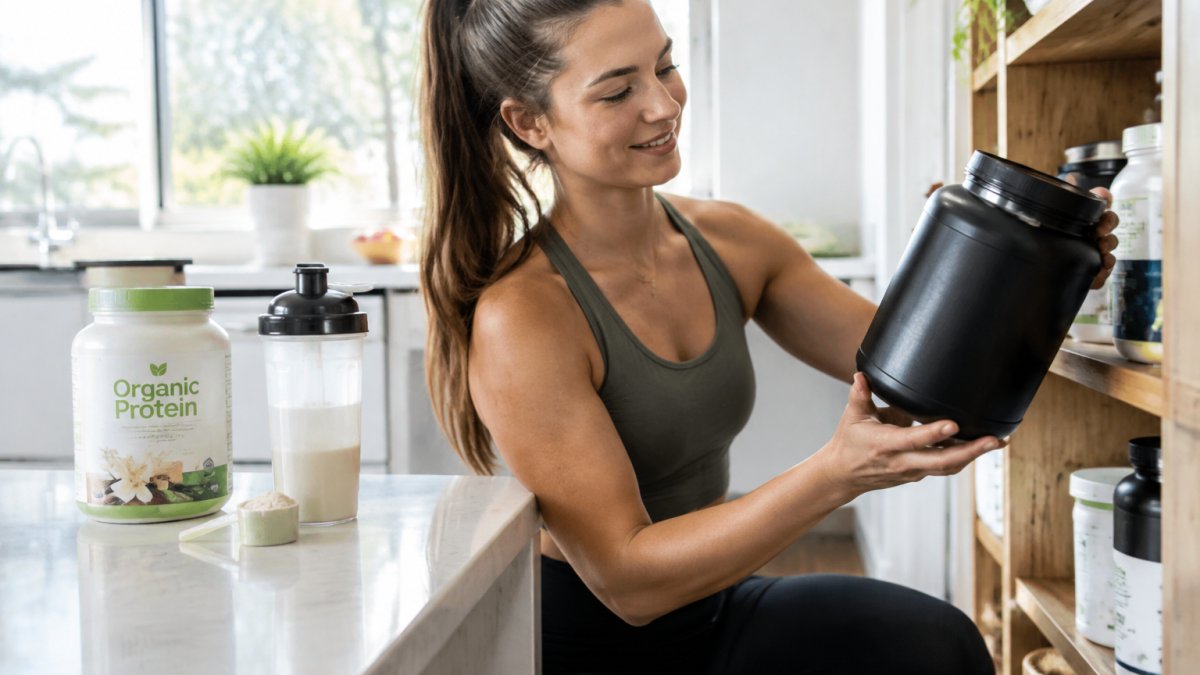
How to Choose a Protein Powder When You're Just Starting Out
Choosing a protein powder comes down to three checks: what the certification actually guarantees, what the ingredient list hides, and how the amino acid profile fits your goal. Beginners who skip these end up with a tub they never finish. Below, each check becomes a concrete step you can run in the aisle in under five minutes.
What Organic Certification Actually Means
Organic certification is third-party verification that a product meets a defined standard for farming, processing and ingredient sourcing.
The word "organic" on a label is not self-declared.
Certification guarantees a process, not a nutrition outcome.
For readers weighing the broader case, our guide on why organic supplements beat synthetic ones walks through the sourcing and processing differences in more detail.
Reading the Ingredient List and Amino Acid Profile
The ingredient list tells you more than the front of the tub ever will. Ingredients are listed by weight, so anything near the top is present in meaningful amounts. If the protein source is first, the tub is what it claims to be.
Then look at the amino acid profile. A complete protein contains all nine essential amino acids your body cannot make itself. Whey is naturally complete.
Run these four checks before you buy:
- Protein per serve, not per scoop. Compare the grams of protein in the nutrition panel against the scoop size. A 40 g scoop delivering 20 g of protein is half filler by weight; a 30 g scoop delivering 25 g is denser.
- Protein source position. The named protein (whey, pea, rice, hemp) should appear first or second on the ingredient list.
- Sweetener and additive load. Long lists of artificial sweeteners, gums and flavourings are worth flagging if you are sensitive to them. A shorter list is easier to troubleshoot when something does not sit right.
A Beginner's Five-Minute Label Routine
If you want a repeatable process rather than a set of principles, use this order:
- Flip to the nutrition panel first. Note protein grams per serve and serve size in grams. Divide protein by serve size for a rough protein density, around 70 per cent or higher is a dense powder.
- Read the ingredient list top to bottom. Confirm the protein source is first, and scan for unrecognised sweeteners, gums and flavourings.
- Check the certification mark. Match the logo to the claim on the front. No logo means "organic" is unverified.
- Check the amino acid panel if printed. Look for all nine essential amino acids, or a "complete protein" statement backed by the blend.
- Compare cost per serve, not pack price. Divide pack price by the number of serves listed. A larger tub is only better value if the serve count is proportionally larger.
Organic Whey Protein Powder: Grass-Fed Options for Dairy Drinkers
Organic whey protein powder suits anyone who tolerates dairy and wants a fast-digesting, naturally complete protein.
Whey is naturally a complete protein and generally mixes easily in water. If you drink milk without issue, it is a common starting point.
Dairy-free readers should skip to the plant section. Everyone else can browse the full whey protein range. If you react to lactose specifically, a whey protein isolate is filtered further and typically lower in lactose than a concentrate, making it the gentler entry point.
Best for: dairy-tolerant beginners who want a complete protein with minimal fuss. Skip if: you avoid dairy or react to lactose even in small amounts.
Organic Plant-Based Protein Powder: Pea, Rice and Blends
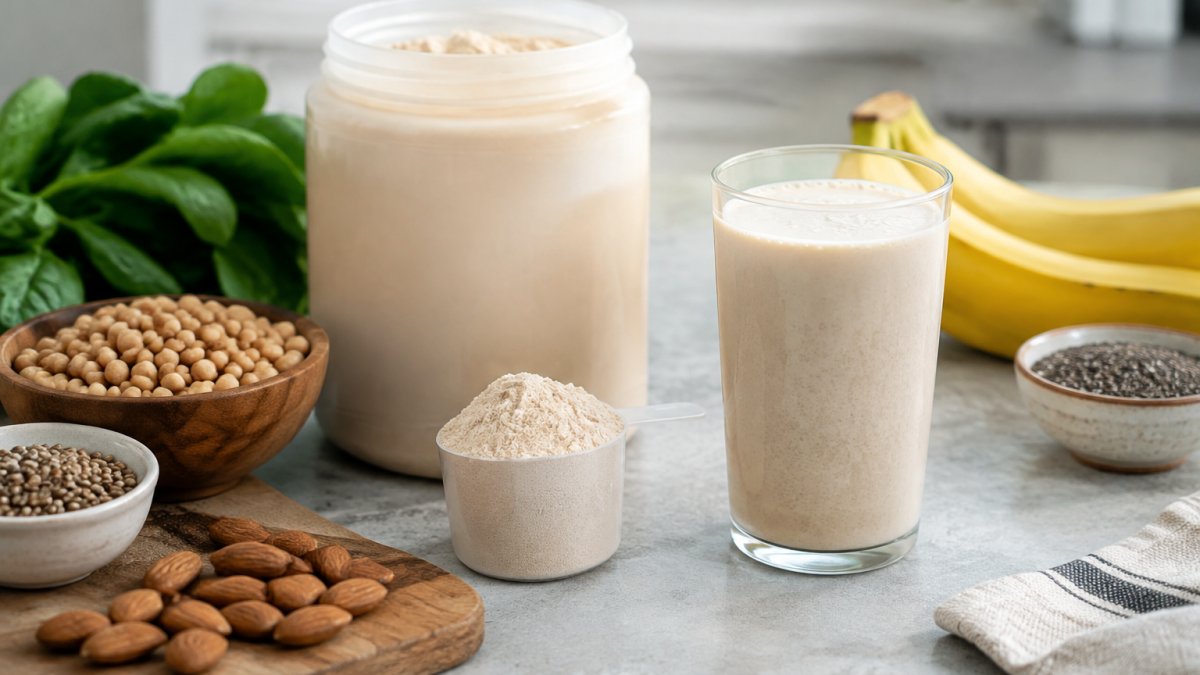
Organic plant-based protein powder covers pea, rice, hemp and multi-source blends.
Pea protein is often high in protein per scoop and can mix into a thicker shake.
Hemp adds flavour character some beginners love and others do not.
Plant powders can absorb water differently. Adding powder to liquid rather than the reverse usually helps avoid clumps.
Best for: dairy-free, vegan, or soy-free beginners, and anyone with food sensitivities. Skip if: you want the thinnest texture and simplest amino acid profile.
Protein Powder Serving Size for Beginners: How Much to Take
A beginner serving of protein powder is typically one scoop, which most products formulate to deliver roughly 20 to 25 grams of protein. Start with one scoop daily and adjust from there.
Serving size is where beginners overshoot. More protein is not automatically better, and a double scoop on day one is a reliable route to bloating. Your body adapts to higher protein intakes gradually.
Use this starting framework:
- One scoop daily for the first two weeks, taken with a meal or after training
- Check the protein per serving on the panel, not the scoop size, since scoops vary between brands
- Count food first. If you already eat eggs, dairy or meat at most meals, one scoop covers the gap
How to Mix It Without Clumps
Most beginner complaints about texture are technique problems, not product flaws. The order you combine powder and liquid matters more than the shaker you use.
- Liquid first, powder second. Add water or milk to the shaker, then the scoop. Powder dropped into a dry shaker sticks to the base and forms a plug shaking cannot break up.
- Use more liquid than the label suggests for the first serve. Plant powders absorb water differently, so start with roughly 250-300 ml per scoop and adjust down once you know how thick you like it.
- Shake in two short bursts, not one long one. A ten-second shake, a small top-up of liquid, then a second shake loosens clumps a single long shake leaves behind.
Watch out: hot liquid will cook and clump whey protein. If you want a warm drink, mix the powder into a small amount of cold liquid first, then stir it into the warm base off the heat.
Timing: What Matters and What Doesn't
Beginners often overthink timing. The evidence does not support a narrow "anabolic window" that closes minutes after training, total daily protein intake matters far more than the exact minute you drink a shake.
Practical guidance:
- Take it whenever it fits your routine. With breakfast, after training, or as an afternoon snack all work.
- Pair it with a meal or snack if you are prone to bloating. A scoop on an empty stomach is more likely to sit heavily in the first week.
- Keep it consistent rather than perfectly timed. A daily habit at the same time is easier to sustain than chasing an optimal window.
Folding Powder Into Meals
A shake is the obvious use, but beginners often find powder easier to tolerate when it is part of a meal rather than a drink on its own:
- Stir a scoop into oats or yoghurt for a higher-protein breakfast.
- Blend it into a smoothie with fruit and milk to mask the texture of plant blends.
- Add it to pancake or muffin batter in place of a portion of the flour, keeping in mind that whey and plant powders absorb liquid differently.
Start with one tub, one scoop a day, and give it two weeks before changing anything. That is enough time to judge how it sits with your digestion and whether the flavour is one you will actually keep drinking.
Common Beginner Mistakes and When Powder Isn't Necessary
Most beginner mistakes are buying errors, not training errors. The biggest is choosing on flavour and price while ignoring the certification mark and the amino acid profile.
Here is what we see go wrong most often:
- Trusting the front of the tub. "Natural" and "high protein" are not regulated the way certification marks are
- Buying a giant tub. Start smaller until you know the powder agrees with you
- Ignoring cost per serving. A cheap tub with tiny servings can cost more per gram of protein than a pricier one
And sometimes powder is simply unnecessary. If you already hit your protein needs through whole foods, a powder adds convenience, not magic. It is a tool for closing a gap, not a requirement for muscle growth.
Choosing Your First Organic Protein Powder at My Health Pantry
The best organic protein powder for beginners is the one you will actually use daily, matched to your dietary needs and verified by a certification mark. That is the whole test.
At My Health Pantry, we stock organic, natural and sports supplement brands with strict quality control, and we work directly with manufacturers so savings pass to you rather than sitting in a middleman's margin. For the wider buying picture, our guide on buying organic protein powder online covers it. For a concrete beginner-friendly starting point, the BioPractica Femme Essential Protein is a straightforward option to compare against the shortlist above.
Start with one tub, one scoop a day, and give it two weeks.
Frequently Asked Questions
What is the best organic protein powder for beginners?
There is no single best option because it depends on your diet. If you eat dairy, a grass-fed organic whey protein powder is a straightforward starting point. If you avoid dairy, an organic plant-based protein powder combining pea and rice protein gives you a broader amino acid profile than a single-source powder. Look for clear organic certification, a stated protein amount per serving and a short ingredient list, then compare cost per serving rather than pack price.
Is whey or plant-based protein powder better for beginners?
Whey is a complete protein with a naturally high essential amino acid content and mixes easily, which makes it simple for beginners who tolerate dairy. Plant-based powders suit anyone avoiding dairy or managing food sensitivities, but a single plant source is often lower in one or two amino acids, so blends of pea and rice perform better. Choose based on your dietary restrictions first, then compare protein per serving and taste.
How much protein powder should a beginner take?
Start with one serve per day, which is typically the serving size stated on the label, often around 25 to 30 grams of powder delivering 20 to 26 grams of protein. Use it to fill a gap in your daily intake rather than replacing meals. If you are new to protein powder, take it after training or with breakfast and see how you feel before increasing. Anyone with a medical condition should check with their practitioner.
Can you use organic protein powder every day?
Yes, daily use is common and suits most people when it forms part of a balanced diet. Keep total protein intake in mind: powder is a convenience, not a substitute for whole foods like eggs, fish, legumes and dairy. Rotate flavours and brands if you get bored, and check the ingredient list for artificial sweeteners or additives if you prefer a minimally processed product.
Is organic protein powder suitable for people with dietary restrictions?
It can be, but check the label for each restriction. Dairy-free and vegan buyers should choose plant-based powders, and anyone with food sensitivities should look for soy-free and hypoallergenic options with short ingredient lists. Organic certification covers how ingredients are produced, not allergies, so always read the allergen statement and introduce a new powder gradually if you have a sensitive gut.