 Listicle
Best Zinc Supplement for Immune Support: Australian Buying Guide
Last Updated: October 30, 2026
Quick Summary
The best zinc supplement for immune support in Australia is one that clearly states its elemental zinc dose per serve, names the zinc form and carries an AUST L number. Compare products on cost per elemental milligram rather than the total weight on the pack, and check the adult intake and upper limits before daily use.
- Compare products on elemental zinc per serve, not the compound weight printed on the front of the pack.
- Look for an AUST L number on the label, which shows the product is listed on the Australian Register of Therapeutic Goods.
- Divide pack price by serves, then by elemental zinc per serve, to compare true value.
- The Australian RDI for zinc is about 14 mg daily for adult men and 8 mg for adult women.
- Space zinc doses away from certain antibiotics, and check with a pharmacist if you take regular medication.
Table of Contents
- How Zinc Supports Immune Function and Skin Healing
- Best Form of Zinc for Immune Support
- Top Zinc Supplements Available in Australia
- Zinc Dosage for Adults and Upper Intake Limits
- Zinc Deficiency Symptoms to Watch For
- Zinc Supplement Side Effects and Medication Interactions
- Choosing Your Zinc Supplement and Where to Buy It Affordably
- Frequently Asked Questions
Zinc is one of the supplements people often reach for during cold and flu season, yet choosing the best zinc supplement for immune support in Australia is surprisingly hard in a busy pharmacy. Products look alike on the label, but the form of zinc, the dose of elemental zinc and the price per dose differ widely. This guide from My Health Pantry covers what to look for, how much zinc adults generally need and how to pick a product that suits you.
Zinc is a mineral the body needs for normal immune function and skin healing. It is not stored in large amounts, so regular intake from food or supplements matters. Here are the practical points for comparing products without getting lost in the marketing.
Quick Picks:
- Best for everyday immune support: a zinc tablet with a clearly stated elemental zinc dose
- Best for skin and wound healing: a zinc product whose label names the form and the intended use
- Best value: a product where you can compare the cost per elemental milligram
How Zinc Supports Immune Function and Skin Healing
Zinc plays a role in the normal functioning of immune cells and in the process of tissue repair. Many people take zinc because they want general immune support during winter, and the mineral is also promoted for skin health.
The important word is "normal." Zinc contributes to normal immune function when intake is adequate. Set realistic expectations before you buy.
Best Form of Zinc for Immune Support
Zinc comes bound to other compounds, and the form affects how the mineral is absorbed and how much of the label weight is actually zinc. Vitamin C is a common companion nutrient for immune support, so you can view the vitamin C products if you are weighing zinc forms alongside it. Common forms you will see include zinc gluconate, zinc citrate, zinc picolinate and zinc glycinate.
Check whether the product states the elemental zinc per tablet, and whether the form suits your tolerance.
Elemental Zinc Versus Compound Weight
This trips up most buyers. A 50 mg zinc gluconate tablet does not contain 50 mg of zinc; the compound weight includes the molecules bound to the zinc, so elemental zinc is a smaller figure. Always compare products on the elemental zinc figure on the supplement facts panel, not the total weight on the front of the pack.
Top Zinc Supplements Available in Australia
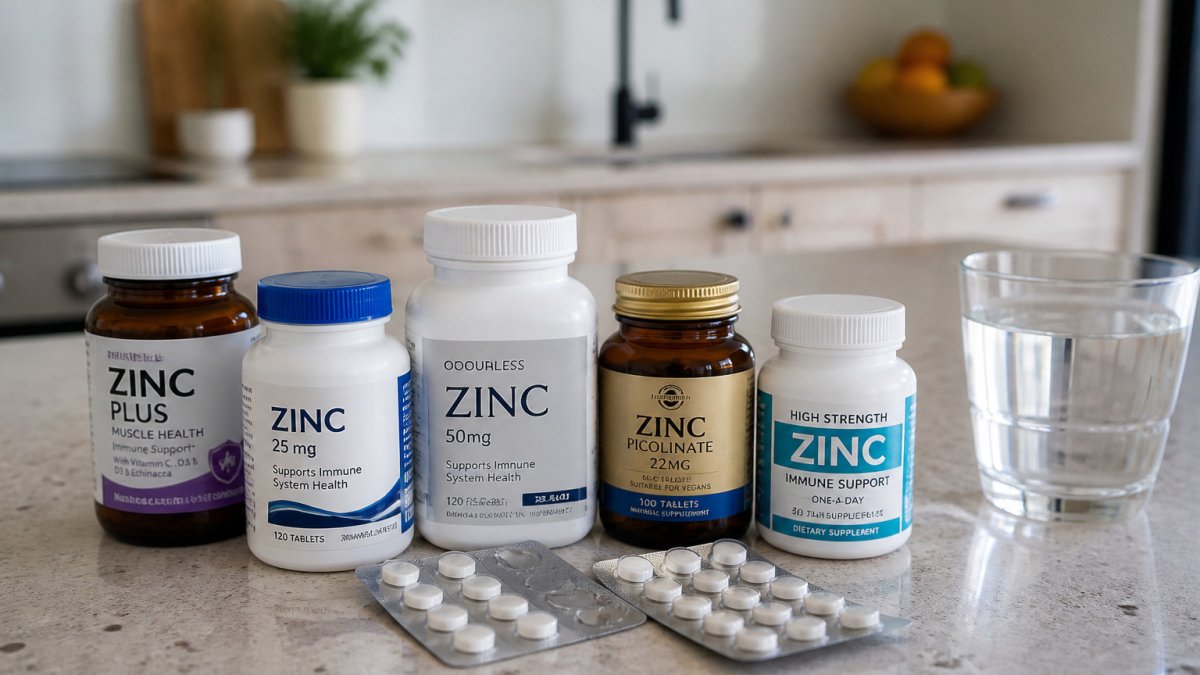
Most guides to the best zinc supplement for immune support in Australia list brand names without the numbers that let you compare them. The table below focuses on what you can verify from a label: zinc form, elemental zinc per serve and format. Where a figure is not stated on the pack, that is itself useful information, a product that does not disclose elemental zinc is harder to compare and dose accurately.
| Product | Zinc form stated | Elemental zinc per serve | Format | Notes for buyers |
|---|---|---|---|---|
| Metagenics Zinc | Not specified in supplied research | Check label | Tablet | Australian practitioner-range product presented for immune and skin support |
| Thorne Zinc Picolinate | Picolinate | Check label | Capsule | Named in more than one supplied review source |
| NOW Zinc Glycinate | Glycinate | Check label | Capsule | Included in a supplied expert roundup |
| Nature Made Zinc | Not specified in supplied research | Check label | Tablet | Single-mineral product in a supplied roundup |
| Source Naturals OptiZinc | OptiZinc (zinc monomethionine) | Check label | Tablet | Named zinc product for comparison |
| MegaFood Zinc Tablets | Not specified in supplied research | Check label | Tablet | Tablet-format zinc in a supplied roundup |
| Klean Athlete Klean Zinc | Not specified in supplied research | Check label | Capsule | Sports-oriented roundup pick |
| Swisse Ultiboost Zinc+ | Not specified in supplied research | Check label | Tablet | Australian retail listing; presented for immune, skin and reproductive support |
How to read the table like a label checker
Three columns do the real work. Form tells you what the zinc is bound to, picolinate, glycinate, citrate, gluconate or monomethionine, which affects absorption and stomach tolerance for some people. Elemental zinc per serve is the only figure that lets you compare strength across products; 25 mg elemental from one brand is directly comparable to 25 mg from another, regardless of compound weight. Format matters for intended use: a swallowed tablet suits daily maintenance, while a lozenge dissolves slowly in the mouth and is a different product category with different evidence.
If a listing does not state elemental zinc per serve, look elsewhere rather than guess.
Australian availability and value comparison
Value in zinc is not price per bottle, it is cost per elemental milligram. Divide the pack price by the number of serves, then divide again by the elemental zinc per serve. A 60-tablet pack at $19.95 providing 25 mg elemental zinc per tablet works out to about 33 cents per serve and roughly 1.3 cents per elemental milligram.
Supplements sold in Australia must be listed with the Therapeutic Goods Administration (TGA) on the Australian Register of Therapeutic Goods (ARTG), and listed medicines carry an AUST L number on the label.
Skip if: the label does not state elemental zinc per serve, because you cannot compare dose or value accurately.
When comparing products, look for one that states elemental zinc per serve clearly and carries an AUST L number.
Zinc Dosage for Adults and Upper Intake Limits
Most zinc guides say "take the recommended amount" without telling you what that is. If you want alternatives to a plain zinc product, you can see the general immunity supplement range. This section gives the Australian reference values, explains why food zinc and supplemental zinc are counted differently, and sets out the upper limit that makes prolonged high-dose use a bad idea.
Australian reference values
The Nutrient Reference Values for Australia and New Zealand, published by the National Health and Medical Research Council (NHMRC), set the recommended dietary intake (RDI) for zinc. Confirm the current values for your situation with the NHMRC Nutrient Reference Values and with a pharmacist or GP.
| Group | Recommended dietary intake (zinc) |
|---|---|
| Adult men (19-70 years) | About 14 mg per day |
| Adult women (19-70 years) | About 8 mg per day |
| Pregnancy | Higher than the non-pregnant RDI, check the current NRV tables |
| Breastfeeding | Higher than the non-pregnant RDI, check the current NRV tables |
Two things drive the difference between men and women: body size and losses. Men generally have higher requirements, while women's requirements rise during pregnancy and breastfeeding because zinc is used in growth and milk production. Older adults and people on restricted diets may also need more attention to intake.
Food zinc versus supplemental zinc
This distinction matters more than most labels admit. The RDI is set for total zinc from food, and food zinc arrives alongside other nutrients, including copper and iron, that compete with and regulate absorption. A supplement delivers a concentrated dose with none of that buffering, which is why the upper limit is framed around total intake from all sources, not just the tablet.
A practical habit is to estimate your food zinc first. Meat, poultry, seafood, legumes, nuts, seeds and wholegrains are the main contributors in a typical Australian diet, and a mixed diet usually supplies a meaningful share of the RDI. You can browse the wider vitamins and minerals range to see other mineral products that may be taken alongside zinc.
The upper limit and why it exists
The upper limit (UL) for zinc protects against the main long-term risk of high intake: copper deficiency. Zinc and copper compete for absorption in the gut, so sustained intake above the UL can gradually deplete copper, causing anaemia and neurological symptoms. This is why "more zinc" is not a safe default and why the UL applies to total intake from food and supplements combined.
Medication and nutrient interactions
Zinc is not inert, and timing matters with some medicines. Zinc can reduce the absorption of certain antibiotics, particularly tetracyclines and fluoroquinolones, if taken at the same time, so practitioners typically advise spacing them by a few hours. Zinc can also interact with penicillamine and other medicines, and competes with iron and copper supplements taken together.
For the official Australian intake values, see the NHMRC Nutrient Reference Values. Zinc should not be combined with other supplements without checking for interactions first.
Zinc Deficiency Symptoms to Watch For
Low zinc can show up as slow wound healing, a dulled sense of taste or smell, skin changes and more frequent infections. These signs have many possible causes, so they are not a reason to self-diagnose. If you notice persistent symptoms, speak with your GP, who can order a blood test and rule out other conditions. Supplementing without knowing your status can cause its own problems.
Zinc Supplement Side Effects and Medication Interactions
Zinc on an empty stomach can cause nausea, and high doses over time can affect copper absorption. Long-term high intake is the main concern, which is why the upper limit matters. Zinc can also interact with some antibiotics and other medicines, so keep your pharmacist informed about everything you take. Speak to a healthcare professional before starting zinc if you are pregnant, breastfeeding or take regular medication.
Watch out: do not take zinc at the same time as certain antibiotics without checking, because zinc can reduce how well they are absorbed.
Choosing Your Zinc Supplement and Where to Buy It Affordably
Start by deciding what you want the zinc for, then compare products on elemental zinc per serve, form, pack size and cost per serve. You can browse the full zinc supplement range to compare the available products side by side. A cheaper bottle is not better value if each tablet contains less elemental zinc. Read the label, confirm the dose, and check the reviewed product details before you buy.
For current prices, check My Health Pantry's website, as pricing depends on the product, quantity and delivery.
Frequently Asked Questions
What is the best zinc to take for immune support?
Zinc picolinate, zinc gluconate and zinc glycinate are the forms most commonly used in supplements, and the research does not show one form clearly outperforming the others for immune support. What matters more is the elemental zinc content per tablet, which is the amount your body can use. Check the label for the elemental figure rather than the total compound weight, and choose a form you tolerate well with your stomach. Taking zinc with food can reduce nausea for some people.
How much zinc should you take each day?
The recommended daily intake for zinc varies by age and sex, and the current figures are set out in the NHMRC Nutrient Reference Values. Check with a doctor or pharmacist before taking higher doses for a long period.
Can zinc supplements interact with medicines?
Yes. Zinc can interact with some medicines, so timing matters. If you take regular prescription medicines, speak to your pharmacist before starting a zinc supplement.
Can you take zinc every day?
Long-term intake above the upper limit can affect copper status. A health professional can help you decide whether ongoing supplementation suits your situation.