 Comparison
Bulk Nutrients vs Aussie Health Products: Which Online Supplement Store Wins?
Last Updated: November 14, 2026
Quick Summary
Bulk Nutrients vs Aussie Health Products comes down to your basket: Bulk Nutrients is a direct-to-consumer manufacturer with a tight, protein-led range, while Aussie Health Products is a retailer-style store built around variety across vitamins, naturals and sports nutrition. If your basket is one product, a manufacturer wins; if it is a household's worth of wellness, a discounter with range wins.
- Bulk Nutrients' 1kg whey isolate works out to roughly 9.3c per gram of protein.
- A 2kg bulk bag lowers cost per gram to about 8.2c, or roughly $2.47 per 30g scoop.
- Compare cost per serve only within the same protein type, such as whey isolate against whey isolate.
- Check the ingredient list for added glycine, taurine or individual amino acids that inflate protein figures.
- A subscription can close most of the gap between retail and bulk pricing on a monthly 1kg tub.
Table of Contents
- Bulk Nutrients vs Aussie Health Products: The Quick Verdict
- Bulk Nutrients Protein Powder: What You Actually Get
- Aussie Health Products Supplements: Range and Retail Model
- Supplement Price Per Serve Comparison: The Real Cost of Protein
- Online Supplement Store Comparison: Shipping, Packaging and Service
- Dietary Restrictions and Sustainability: What Neither Store Advertises
- Choosing Your Supplement Store: A Decision Framework
- Stock Up on Discounted Supplements at My Health Pantry
- Frequently Asked Questions
Bulk Nutrients vs Aussie Health Products: The Quick Verdict
If you are weighing up Bulk Nutrients vs Aussie Health Products, the short answer is that they solve different problems. For a direct side-by-side, see Is There a Better Aussie Health Products Alternative?. Bulk Nutrients is a direct-to-consumer manufacturer with a tight, protein-led range. To benchmark it against another rival, read Bulk Nutrients vs Supplement Mart: Which Is Better?. Aussie Health Products is a retailer-style store built around variety across vitamins, naturals and sports nutrition.
At My Health Pantry, we watch this comparison closely because it sits at the heart of a bigger question: do you buy cheap staples from a manufacturer, or shop a wider catalogue at a discount? Our view leans towards the second option for anyone buying more than protein, because a broader range can be useful in one order.
Below, we break down protein specs, cost per serve, shipping, dietary fit and a decision framework you can act on today.
Bulk Nutrients Protein Powder: What You Actually Get
Bulk Nutrients built its reputation on one thing: no-frills protein at a low cost per serve. Their whey protein isolate is the flagship, and the label tells a clean story.
Where it gets thinner is breadth.
Aussie Health Products Supplements: Range and Retail Model
What most shoppers miss is that "retailer" and "expensive" are not the same thing. A discounter that buys directly from manufacturers can undercut full retail while still offering variety. That is the gap My Health Pantry was built to fill: a wide range of organic, natural and sports supplement brands, with discounts described on our website.
Supplement Price Per Serve Comparison: The Real Cost of Protein
Cost per serve is a useful price comparison. A big bag with a low sticker price can still cost more per gram of protein than a smaller tub, and a cheap tub with filler can cost more again once you account for how much protein you actually get.
Here is how to run the maths yourself, using the label rather than the marketing:
- Find the protein grams per 100g on the nutritional panel.
- Divide the pack price by the total grams of protein in the pack.
- Compare that figure across brands, not the pack price.
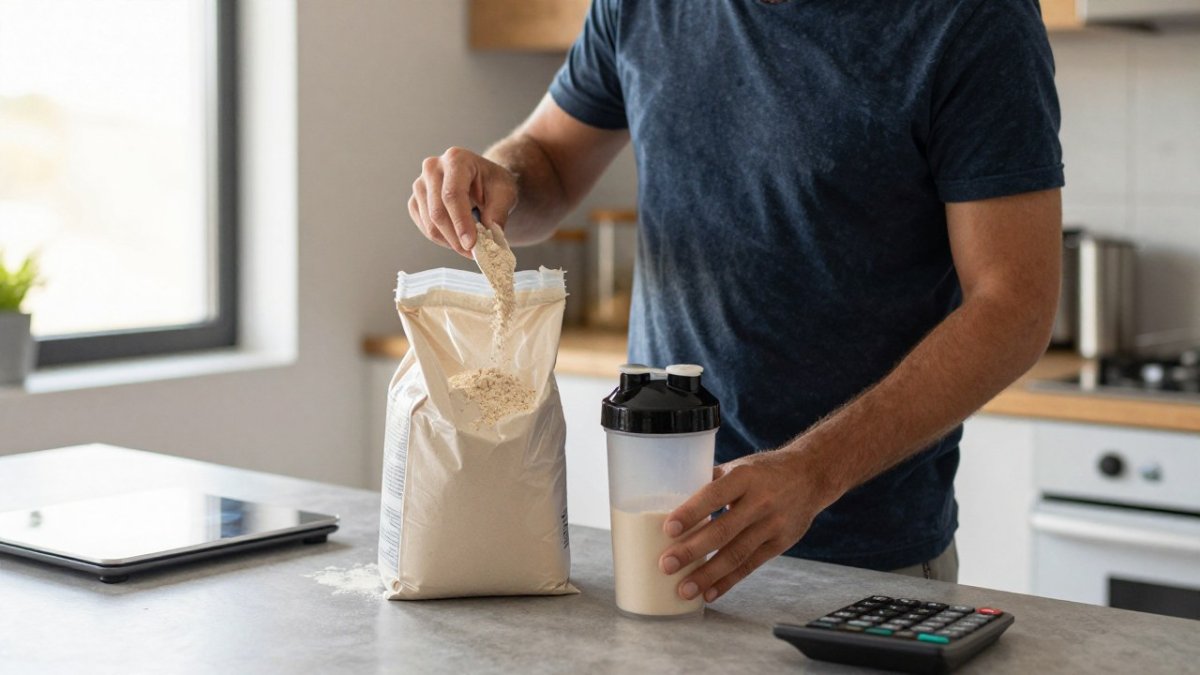
Worked example: what the three-step method actually returns
Take a hypothetical 1kg bag of whey protein isolate. Divide its pack price by the grams of protein it contains to find the cost per gram, then multiply by the grams of protein in a scoop. A larger bag at a lower per-kilo price can reduce the cost per scoop, provided you finish it before the best-before date.
The same method applied to a retail tub or a premium brand will show how the cost per gram compares, once you account for fillers or added aminos.
| Product type | Pack price (AUD) | Protein per 100g | Protein in pack | Cost per gram of protein | Cost per 30g scoop |
|---|---|---|---|---|---|
| Bulk whey isolate, 1kg | $79 | 85g | 850g | ~9.3c | ~$2.79 |
| Bulk whey isolate, 2kg | ~$140 | 85g | 1,700g | ~8.2c | ~$2.47 |
| Retail whey isolate, 1kg | $85 | 80g | 800g | ~10.6c | ~$3.19 |
| Premium whey isolate, 1kg | $95 | 90g | 900g | ~10.6c | ~$3.17 |
Protein in pack
Check current pack prices on each store's website before you buy, as pricing depends on quantity, dates, and delivery. The pattern holds: the bulk bag wins on cost per gram of protein, but the gap is narrower than the sticker suggests, and it disappears entirely if you buy a single tub and pay delivery on top.
Where cost per serve misleads
Cost per gram of protein ignores everything that is not protein. A cheap isolate with a thin amino acid profile, added sweeteners or a clumping texture can cost more in real terms once you factor in wasted scoops and the second tub you buy because the first was undrinkable. Compare cost per serve only within the same protein type, whey isolate against whey isolate, plant blend against plant blend.
Watch out: a protein figure on the panel can include added free amino acids, which inflates the number without delivering the same complete protein as a whole whey or plant source. Check the ingredient list for added glycine, taurine or individual amino acids before you treat the protein number as comparable.
Subscription versus one-off: the cost gap competitors miss
Most comparisons price a single purchase and stop. The bigger saving sits in how you buy. A subscription typically trims a further slice off the per-order price and removes the delivery fee on smaller baskets, which changes the maths on a 1kg tub more than on a 2kg bag. If you buy one tub a month, a subscription can close most of the gap between retail and bulk pricing.
Run the comparison annually, not per order: multiply the cost per serve by the serves you actually use in a year, then add delivery and any subscription discount. That annual figure is the only one that reflects what you will spend.
If you want to understand why online stores can undercut in-store retail on the same tub, our explainer on why online supplements are often cheaper than in-store walks through the supply chain.
Online Supplement Store Comparison: Shipping, Packaging and Service
Speed and packaging decide repeat business in this category. A damaged tub of protein is money on the floor and a mess in the box. The practical question is whether the order arrives intact and on time.
Packaging quality should be a filter, not an afterthought. Look for stores that seal powders and liquids separately, use rigid outer cartons rather than satchels for heavy tubs, and publish realistic dispatch windows.
Customer service matters just as much. A store that answers questions about authenticity, batch numbers and stock before you buy is worth considering. If you are time-poor, check the dispatch cut-off before ordering on a Friday.
Dietary Restrictions and Sustainability: What Neither Store Advertises
Dietary fit is an important part of choosing a protein. A whey isolate is not suitable for vegans or anyone avoiding dairy, and shoppers managing FODMAP sensitivities may need to read sweetener and additive lists closely, because sugar alcohols and some fibres can trigger symptoms in sensitive guts.
Matching the product to the restriction
| Restriction | What to avoid | What to look for | Practical note |
|---|---|---|---|
| Vegan / dairy-free | Whey, casein, milk solids, lactose | Pea, rice, soy or blended plant protein with a full amino acid profile | Plant blends often need a larger scoop to match whey's protein density |
| FODMAP-sensitive | Sorbitol, mannitol, xylitol, some inulin and chicory root fibre | Short ingredient lists, no sugar alcohols, low-FODMAP certified where available | Sweetener choice matters more than protein source for gut symptoms |
| Keto / low-carb | Maltodextrin, added sugars, high-carb fillers | Low carb count per serve, MCT or healthy fat sources | Check total carbs per serve, not just sugar |
| Gluten-free | Wheat-derived fillers, some flavour systems | Explicit gluten-free claim, not just 'no gluten ingredients' | Certification is stronger evidence than a marketing line |
| Dairy-free but not vegan | Whey and casein | Egg, pea, rice or soy protein | Some plant proteins are made on shared dairy lines, check the allergen statement |
A common pattern is that shoppers pick a protein for its macros and only later discover the sweetener or fibre source does not suit them. Reading the ingredient list before the nutritional panel avoids that. If plant-based is your requirement, browse our plant protein range to see dairy-free options side by side, including blends with a full amino acid profile.
Watch out: 'dairy-free' and 'vegan' are not interchangeable on an Australian label. A product can be dairy-free but contain egg or honey, and a vegan claim does not guarantee it is made on a dairy-free line. Check both the allergen statement and the certification before you commit to a bulk bag.
Sustainability: the question neither store answers upfront
Packaging choices, recyclability and refill options are rarely front and centre in this category, so ask before you commit to a bulk bag you will use for months. The practical questions: is the tub or bag recyclable through kerbside collection in your council area, does the brand offer a refill or return scheme, and is the packaging right-sized to the product?
A larger bag is usually the lower-packaging option per gram of protein, one sustainability argument for bulk buying that price comparisons ignore. The counter-argument is waste: a 2kg bag you do not finish before the best-before date is worse for both your wallet and the environment than two 1kg tubs you actually use.
Ask the store directly about its packaging material and recycling pathway.
Choosing Your Supplement Store: A Decision Framework
Use this framework to decide in under two minutes:
| Your situation | Best approach | Why |
|---|---|---|
| Buy one staple protein in bulk | Manufacturer direct | Lowest pack price on a known product |
| Need vitamins, beauty and sports in one order | Discount retailer | Range plus savings in one delivery |
| Managing a health concern | Practitioner-informed range | Broader product choice matters more |
| Vegan or dairy-free | Plant protein specialist | Whey isolate is off the table |
| Price-sensitive across brands | Direct-from-manufacturer discounter | Up to 50% off retail, every day |
The pattern is clear. If your basket is one product, a manufacturer wins. If your basket is a household's worth of wellness, a discounter with range wins. For the next step, read our guide on how to buy discounted sports supplements online before you place an order.
Stock Up on Discounted Supplements at My Health Pantry
The real challenge is not finding a cheap tub of protein. It is finding one store that covers protein, immunity, digestive health and beauty without charging full retail, exactly the gap we built My Health Pantry to close.
Our range spans organic products, natural health brands and sports supplements, with strict quality control and testing behind every listing. Discounts of up to 50% off the manufacturer's suggested retail price are described on our website.
Get started with My Health Pantry and stock your whole routine at discounted prices.
Frequently Asked Questions
What is the difference between Bulk Nutrients and Aussie Health Products?
Bulk Nutrients is a direct-to-consumer manufacturer with a tight, protein-led range. Aussie Health Products is a retailer-style store built around variety across vitamins, naturals and sports nutrition. The choice depends on whether you want a focused range or variety across many product types.
Which offers better value: Bulk Nutrients or Aussie Health Products?
Value depends on what you buy. Value depends on the exact products you buy. Run a supplement price per serve comparison on the products you want, check current prices on each store's website, and factor in any delivery fees on smaller orders.
Are Bulk Nutrients products made in Australia?
Check the manufacturer's own product information and labels to confirm where a product is made and what it contains.
Which retailer is better for buying multiple health and supplement brands?
A multi-brand online supplement store comparison favours retailers over single-brand manufacturers here. Compare the ranges of each store before committing. My Health Pantry carries a wide range of organic, natural and sports supplement brands, and discounts of up to 50% off recommended retail are described on our website.
How can I compare supplement ingredients and serving sizes?
Check the nutritional panel per 100g rather than per serve, since scoop sizes differ between brands. Look at protein density, sugar content, sweeteners and any fillers or thickeners. Use the protein per 100g figure on each product's label to benchmark products against each other. Then divide the pack price by the number of serves to get a true cost per serve before you buy.