 How-to
How to Verify Authentic Health Supplements in Australia
Table of Contents
- Why Verifying Supplement Authenticity Matters
- Check the Label and Packaging First
- How to Check a Supplement Batch Number
- Confirm ARTG Listing with the Australian Register of Therapeutic Goods
- Look for Third-Party Tested Supplements
- Verifying QR Codes, Seals and Price Red Flags
- What to Do If You Suspect a Fake Supplement
- Booking Your Next Order with Confidence
- Frequently Asked Questions
Last Updated: November 4, 2026
Why Verifying Supplement Authenticity Matters
Counterfeit and mislabelled supplements are a real problem, and they can harm your health. Some contain less of the active ingredient than the label claims. Others contain undeclared substances that can interact with medicines. This guide shows you how to verify authentic health supplements before you buy, and what to do if something looks wrong.
Many shoppers assume a product is genuine because it looks professional. That is not always true. Fake packaging can be very convincing, so it pays to check several details rather than relying on one.
Verifying a supplement means checking:
- The label and packaging
- The batch or lot number
- Whether the product is listed on the Australian Register of Therapeutic Goods (ARTG)
- Any third-party testing claims
- The price, seller and security seals
Each check on its own is limited. Used together, they give you a much clearer picture.
Check the Label and Packaging First
Start with the packaging itself. Look for spelling errors, blurry logos, uneven print or colours that look off. Genuine products usually have clean, sharp printing and consistent fonts.
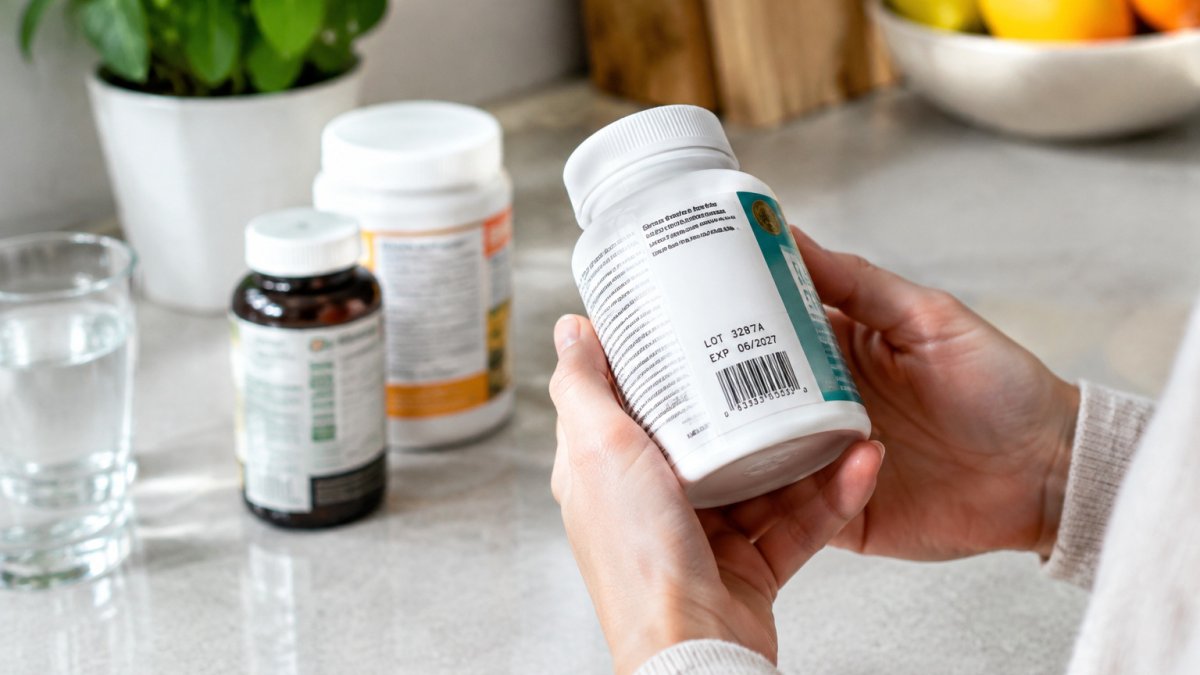
Check that the label includes:
- The product name and brand
- A complete ingredient list with quantities
- The net contents
- The manufacturer or sponsor details
- A batch or lot number
- An expiry date
A missing ingredient list or vague wording such as "proprietary blend" with no amounts is a warning sign. Compare the label with the manufacturer's official product information where you can find it.
How to Check a Supplement Batch Number
The batch number, also called a lot number, tells you when and where a product was made. Find it on the bottle, box or seal, then check it against the manufacturer's records or contact them directly.
A batch number that is missing, scratched off or hard to read should make you cautious. So should a batch code that does not match the expiry date printed on the product. If the details do not line up, do not use the product.
Keep a photo of the label and batch number. If you later need to report a problem, these images will help.
Confirm ARTG Listing with the Australian Register of Therapeutic Goods
In Australia, most listed complementary medicines must be entered on the Australian Register of Therapeutic Goods (ARTG). The ARTG is run by the Therapeutic Goods Administration (TGA). An ARTG listing shows the product has been registered with the regulator.
To check, look for the ARTG number on the label. Then search the TGA's public database to confirm it matches the product name and sponsor. If the number is missing or does not match, treat the product with caution.
A listing does not guarantee the product is right for you. It only shows it has been registered. You still need to check the ingredients and your own health needs.
Look for Third-Party Tested Supplements
A third-party test is only useful if you can tie the report to the exact bottle in your hand. Most brands that publish testing information stop at a badge or a generic PDF, which tells you very little. The skill is in reading the document itself.
Ask for a certificate of analysis (COA) for the specific batch, not the product generally. A COA is the laboratory's record of what it tested and what it found. When you have one, check these details against the label:
- Product name and strength, must match the label exactly, including the form (for example, a specific compound or extract ratio).
- Batch or lot number, must match the number printed on your pack. A COA for a different batch proves nothing about your bottle.
- Manufacture and test dates, the test date should fall within the product's shelf life and be recent enough to be meaningful.
- Laboratory name and accreditation, a named lab with a verifiable address or accreditation number is stronger than an unnamed "independent lab".
- Methods used, look for the technique named (for example, HPLC for potency or ICP-MS for heavy metals), because a result without a method is hard to assess.
Then read what was actually tested. Reports usually fall into three groups, and a good COA covers all three:
- Identity, confirms the ingredient is what the label says it is.
- Potency, shows how much of the active ingredient is present against the label claim.
- Contaminants, covers heavy metals, microbial limits, and where relevant pesticide or solvent residues.
A report that only shows identity is not evidence of potency or safety. A report that shows potency but no contaminant screen leaves the safety question open. If a brand publishes only a summary table with ticks and no values, treat it as a marketing claim rather than verification.
Watch out: a COA can be copied from another batch or edited, so confirm the document through a contact route you found independently, the manufacturer's own website or a phone number from an official listing, rather than a link supplied by the seller.
If the COA is not published, ask the brand or retailer for the batch certificate before you buy. Reputable suppliers can usually provide it, and a refusal or a vague reply is itself useful information. Brands that describe their own strict quality control and satisfaction guarantee, such as Caruso's Natural Health, are a useful point of comparison.
Use this checklist to confirm a certificate of analysis matches the exact bottle you are holding.
| Check | What to look for | Why it matters |
|---|---|---|
| Product name and strength | Matches the label exactly | Confirms the report covers your product |
| Batch or lot number | Matches the number on your pack | A report for another batch proves nothing |
| Manufacture and test dates | Within shelf life and recent | Makes the results meaningful |
| Laboratory name and accreditation | Named lab with verifiable details | Lets you assess the lab's credibility |
| Methods used | Named technique such as HPLC or ICP-MS | A result without a method is hard to assess |
| Identity testing | Confirms the ingredient is what the label says | Verifies the ingredient itself |
| Potency testing | Shows active ingredient against label claim | Shows the dose you are getting |
| Contaminant screening | Heavy metals, microbial limits, residues | Covers safety, not just identity |
Verifying QR Codes, Seals and Price Red Flags
Many products now include QR codes or verification labels. Scan these with care. Before you open any linked page, check that the web address matches the manufacturer's official site. Be wary of codes that lead to unfamiliar domains or ask for personal information.
Also check the seal. A broken, loose or resealed tamper-evident seal means the product may have been opened or swapped.
Price can be a warning too. A deal that looks far too good to be true often is. Compare the price with the manufacturer's usual pricing and with other reputable sellers before you buy.
What to Do If You Suspect a Fake Supplement
Stop using the product as soon as you have doubts. Do not finish the bottle while you investigate, and do not pass it on to anyone else. If you have already taken it and feel unwell, nausea, an unexpected reaction, or symptoms that started after you began the product, speak to your doctor or pharmacist and mention the supplement and the batch number. Keep the pack, including any remaining capsules or powder, because it may be needed for testing or a return.
Then work through a short sequence so you have a record if you need to escalate.
1. Document before you contact anyone. Photograph the front and back of the pack, the batch and expiry panel, the seal, and your receipt or order confirmation. Note where and when you bought it and the price paid. These images are the evidence base for every later step.
2. Compare against the official source. Check the batch number and label details against the manufacturer's own product information, found through a route you located independently rather than a link from the seller. If the batch does not exist, or the label differs from the official version, you have a concrete discrepancy to raise.
3. Contact the seller in writing. Use email or the platform's message system so there is a written trail. State the product, batch number, what you found, and what you want, a refund, a replacement, or an explanation. Keep the tone factual and attach your photos. Give a reasonable deadline for a reply.
4. Report it. A suspected counterfeit or unsafe therapeutic good can be reported to the Therapeutic Goods Administration. Reporting helps regulators identify patterns across sellers and protects other buyers. If the product was bought through an online marketplace, use that platform's report function as well.
5. Recover your money. If the seller does not resolve it, escalate through your payment method. Card payments can be disputed with your bank or card issuer, and buyers should act promptly because dispute windows are limited. Keep your order records, messages and photos ready, as the dispute process will ask for them.
Watch out: do not send the product back before you have photographed it and had a response from the seller, because returning the item can remove your best evidence.
If you are unsure whether a product is genuine, treat it as suspect until the batch and label details check out. The cost of a refund is small compared with the risk of taking an unverified product.
Booking Your Next Order with Confidence
When you are ready to buy, choose a retailer that makes authenticity checks easy. My Health Pantry stocks many supplements and lists product details so you can compare labels and batch information before you order. For a product in the supplements category, you can browse our Chlorella range and check the packaging against the steps above. If you are choosing an immune-support product, our buying guide for zinc supplements explains what to look for on the label.
For further help choosing products suited to your needs, you may also find our guide to protein powder for beginners useful. Check current prices and availability directly on our website, as pricing depends on the product, quantity and delivery options.
Frequently Asked Questions
How can I tell if a health supplement is authentic?
Start with the packaging: check that the seal is intact, the printed text is sharp and consistent, and the product name, manufacturer and ingredient list match the manufacturer's official product information. Confirm the product has an ARTG listing number, which you can search on the Therapeutic Goods Administration's public database. Be cautious of sellers that cannot show a batch or lot number, or whose prices sit far below the usual market level. If anything does not line up, treat the product as unverified and do not take it until you have checked further.
How do I check whether a supplement is registered in the ARTG?
Look on the label for an ARTG number, which usually begins with AUST L or AUST R followed by digits. Search that number on the Therapeutic Goods Administration's public database of registered medicines and listed complementary medicines. The entry should show the product name, sponsor and status. If the number is missing, does not return a result, or the details do not match the bottle, the product may not be lawfully supplied in Australia and you should avoid it.
Are third-party tested supplements more trustworthy?
Independent testing by a laboratory that is not owned by the manufacturer gives extra assurance that the product contains what its label says, in the amounts stated, and free from contaminants. Ask for a certificate of analysis that lists the batch tested and the test methods used, then check that the batch number matches the one on your bottle. Third-party testing supports quality but does not replace ARTG registration, so use both checks together.
What should I do if a supplement looks counterfeit or tampered with?
Stop using the product, keep the packaging and receipt, and photograph the label and batch number. Contact the seller and the manufacturer to report the concern. If you have had an adverse reaction or feel unwell, seek medical advice promptly and tell your health professional which product you took. You can also report a suspected fake or unsafe product to the Therapeutic Goods Administration, which assesses reports of problematic therapeutic goods.