 How-to
Why Online Supplements Are Often Cheaper Than In-Store
Quick Summary
Online supplements often cost less because online retailers avoid the high rent, staffing and shelf-space costs that physical stores must recover in their prices. Fewer middlemen in the supply chain and bulk buying also help keep prices down. A low price alone does not guarantee quality, so check the seller and batch information before buying.
- Physical stores recover rent, rates, staffing and shelf costs from every product they sell.
- Buying direct from manufacturers or authorised distributors removes markups that small stores may pay.
- Bulk buying lets retailers negotiate better wholesale prices and pass savings on to shoppers.
- Compare cost per serving, including shipping, rather than the sticker price of each container.
- Confirm the seller is authorised and check for a lot number matching the manufacturer's records.
Table of Contents
- Why Online Supplements Often Cost Less Than In-Store
- How Online Retailers Keep Operating Costs Low
- Bulk Buying, Promotions and Price Competition
- Are Cheap Supplements Safe?
- How to Check Supplement Authenticity Before You Buy
- Understanding Supplement Shipping Costs
- Comparing True Costs: A Practical Price-Check Method
- Your Next Step: Compare Before You Order at My Health Pantry
- Frequently Asked Questions
Why Online Supplements Often Cost Less Than In-Store
Last Updated: November 12, 2026
Shoppers comparing a tub of protein or a bottle of fish oil often find the online price is noticeably lower than the one at the chemist down the road. That gap is real, and it has straightforward causes.
The reasons online supplements can cost less come down to three things: lower overheads, higher sales volumes and direct buying relationships. Each one removes a layer of cost that a physical store has to recover from its shelf prices.
A common mistake is assuming a lower price means a lower-quality product. Price alone does not tell you much. What matters is where the product comes from, whether it is genuine, and how it has been tested, all of which we cover below.
How Online Retailers Keep Operating Costs Low
Physical stores carry rent, staffing, lighting, shelf space and point-of-sale systems. Each of those costs is spread across the products on display, so it ends up in the price on the label. An online retailer does not pay for a high street shopfront. Its costs centre on warehousing, packing and the website, which scale more efficiently as order volumes grow. Fewer middlemen in the supply chain also means fewer markups between the manufacturer and the customer.
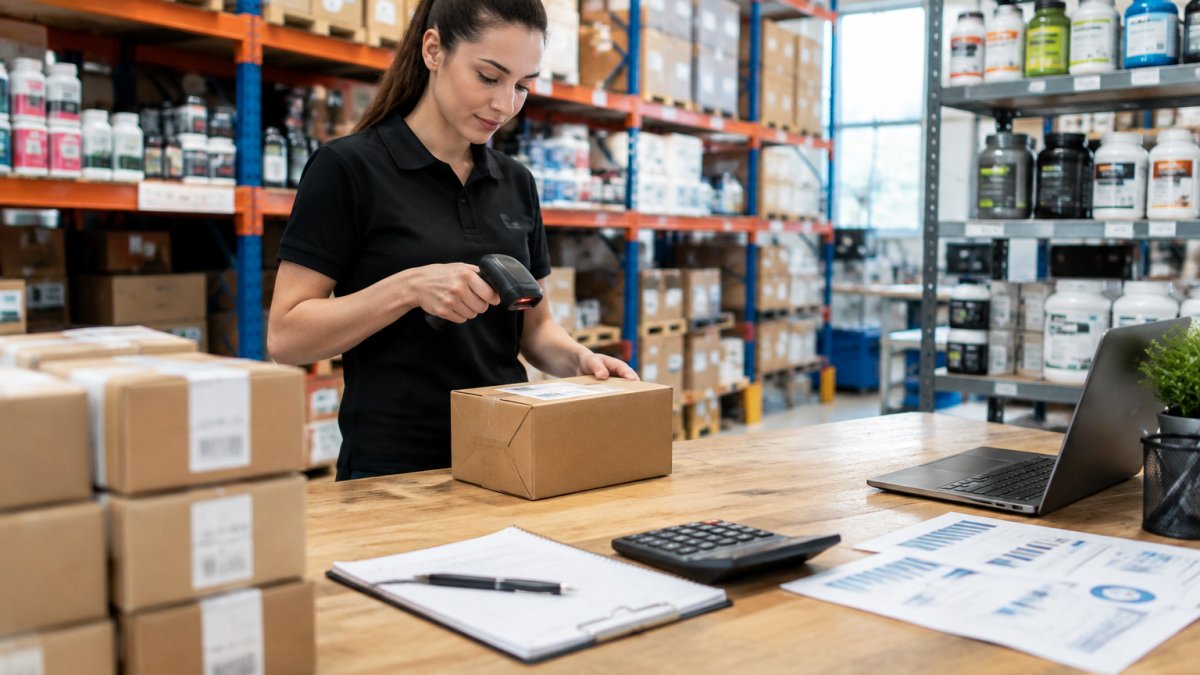
To see where the saving actually comes from, separate the cost lines rather than treating "lower overheads" as one explanation:
- Premises. A physical store recovers rent, rates, fit-out and utilities from every unit sold. An online seller recovers warehouse rent and racking, which is typically a fraction of retail floor space per unit sold.
- Staffing. A shop needs cover for opening hours, even in quiet periods. A warehouse and support team can be scheduled around order volume, so labour is used more efficiently per order.
- Stock holding. Stores must display a wide range of brands and sizes on the shelf. Online sellers can hold stock in a smaller number of locations and replenish as orders arrive, reducing the capital tied up in slow-moving lines.
- Supply-chain layers. Buying direct from the manufacturer or an authorised distributor removes importer and wholesaler markups that a small store may have to pay. Each removed layer is a cost that does not need to be recovered at the till.
- Payment and marketing. Online sellers can use lower-cost payment processing and targeted digital marketing, while a store pays for signage, local advertising and foot-traffic-driven promotions.
The practical result is that the saving is passed to the buyer rather than absorbed by premises. Note that a lower overhead does not mean lower standards, and reputable online retailers still need to meet the same product regulations as any store.
Watch out: a very low price can also come from cutting corners on storage or sourcing, so treat the cost breakdown as a reason to check the seller, not a guarantee of quality.
Bulk Buying, Promotions and Price Competition
Buying in volume lets retailers negotiate better wholesale prices, and many pass part of that benefit on through bulk-size tubs and multi-buy offers. Promotions and seasonal discounts add to this, because online sellers can adjust prices quickly to stay competitive.
Price competition between online stores is also significant. When several retailers stock the same brands, each has reason to keep prices sharp. My Health Pantry offers up to 50% off Manufacturer's Suggested Retail Price, with deals available every day rather than only during sales periods.
Discounts vary by product and stock level, so check the current price on the product page rather than relying on a general figure.
Are Cheap Supplements Safe?
A cheap supplement is not automatically unsafe, but a suspiciously low price on a branded product deserves a closer look. Counterfeit or diluted products are a genuine risk in the wider online market.
The safest approach is to judge safety by the signals you can check: a reputable seller, clear product labelling, batch information and consistent packaging. Price should be the last thing you assess, not the first.
Quality is also something to verify rather than assume. Ask whether the retailer tests its range and whether it can show that testing. My Health Pantry applies strict quality control and testing to its products.
How to Check Supplement Authenticity Before You Buy
Before you order, work through a short checklist:
- Confirm the seller is an established retailer with a clear returns and contact policy.
- Check that the brand name, product name and serving size match the manufacturer's listing.
- Look for batch numbers and expiry dates on the packaging when the product arrives.
- Compare the packaging with the brand's official images, including colours, fonts and seals.
- Be cautious of prices far below every other retailer for the same brand and size.
If anything about a delivered product looks wrong, stop using it and contact the seller. Keep the packaging until the issue is resolved.
To go further than a visual check, verify the seller and the product through the manufacturer:
- Confirm the seller is authorised. Check the brand's own website for an authorised-retailer list or a store locator. If the seller is not listed, ask the manufacturer directly whether that seller is approved to stock the product.
- Ask for a certificate of analysis. For practitioner or sports lines, a reputable seller can usually provide a certificate of analysis (CoA) for the batch, showing third-party testing for identity, potency and contaminants. A CoA should reference the same lot number as the packaging.
- Match the lot number. The lot or batch number on the tub or bottle should be legible and consistent with the manufacturer's records. A missing, smudged or mismatched lot number is a warning sign.
- Check the label against the manufacturer's specification. Ingredient amounts, serving size, allergen statements and any TGA listing or AUST L number should match the official product page. Small differences in wording or dosage can indicate a copy.
- Contact the manufacturer. A short email or web form query to the brand's customer service, quoting the seller and lot number, is the most direct way to confirm authenticity.
- Inspect on arrival. Check the seal, the expiry date, the tablet or capsule appearance and the smell. Damage or inconsistency is grounds to return the product unused.
Under Australian consumer law, the Australian Competition and Consumer Commission (ACCC) provides guidance on your rights when buying goods online, and the Therapeutic Goods Administration (TGA) regulates listed complementary medicines. ACCC guidance on buying online and consumer rights TGA information on listed complementary medicines
Watch out: a seller who cannot or will not confirm authorisation or provide batch-level testing information is a reason to walk away, regardless of how low the price is.
Understanding Supplement Shipping Costs
Shipping is the part of the price most shoppers overlook. A product that looks cheap can end up costing more once delivery is added, so compare the total, not the sticker price.
Shipping charges usually depend on the parcel's weight and size, the delivery speed you choose and whether the order meets a free-shipping threshold. Bulky tubs of protein powder can cost more to deliver than small capsule bottles, even at the same product price.
Check the delivery estimate and returns terms before you order, particularly if you need supplements quickly.
Comparing True Costs: A Practical Price-Check Method
To compare fairly, work out the cost per serving rather than the cost per container. Follow these steps:
- Note the total price, including any shipping or handling fees.
- Divide by the number of servings listed on the label.
- Repeat for each retailer selling the same product and size.
- Confirm the product is identical, with the same formulation and strength.
A lower sticker price on a smaller pack can cost more per serving than a larger, discounted tub. Using this method makes the real difference clear. For a direct comparison of two online supplement retailers, see Bulk Nutrients vs Supplement Mart: Which Is Better?.
The article's four-step method reduces comparison to a single figure, cost per serving, so that a cheap-looking pack is not mistaken for the better deal.
| Step | What to do | Note |
|---|---|---|
| 1 | Add up the total price, including shipping and handling fees | Shipping can change which retailer is cheapest |
| 2 | Divide the total by the number of servings on the label | Gives cost per serving |
| 3 | Repeat for each retailer selling the same product and size | Compare like with like |
| 4 | Confirm the formulation and strength are identical | Same product only |
Your Next Step: Compare Before You Order at My Health Pantry
Lower prices online come from genuine structural savings, but they only help if the product is authentic and the total cost is clear. Start by checking authenticity and comparing cost per serving, then decide on the retailer.
At My Health Pantry, you can browse a wide range of organic, natural and sports supplement brands at discounted prices, with strict quality control applied across the range. book a price-check on our supplement range helps you see the current deals for yourself.
Frequently Asked Questions
Why are supplements cheaper online than in stores?
Online retailers generally carry lower overheads than physical shops. They pay less for retail rent, in-store staff and shelf space, and they can hold stock in fewer, centralised warehouses. Many also buy in higher volumes and sell direct to consumers, which spreads costs across more orders. Those savings can be passed on as lower shelf prices. Prices still vary between retailers, so compare the price per serving and the total cost including delivery before deciding where to buy.
Are cheap online supplements safe to take?
A low price alone does not make a supplement unsafe, and a high price does not guarantee quality. Safety depends on where the product was made, whether it was tested, and whether it was sourced from an authorised seller. Look for clear ingredient lists, batch numbers, expiry dates and evidence of third-party testing where the brand provides it. If a product seems far cheaper than the same brand elsewhere, check the seller's authorisation before ordering. Speak with a health professional if you take medication or manage a health condition.
How can I tell if an online supplement is authentic?
Start by buying from a retailer that clearly identifies itself, lists a physical address and contact details, and states that it sells genuine stock. Check that the brand's own website lists the retailer as an authorised stockist where possible. Inspect the packaging when it arrives: look for sealed inner seals, correct spelling, legible batch numbers and expiry dates. Be cautious of unusually low prices on brand-name products, and check the seller's reviews over time rather than relying on a single rating.
Do online supplement prices include shipping?
Not always. Some retailers show prices that exclude delivery, and the cost is added at checkout. When comparing, add the shipping fee to the item price and divide by the number of serves to find the true cost per serving. Free shipping thresholds can make a larger order cheaper overall, while small orders may cost more than buying locally. Check the delivery terms and any returns policy before you pay. Check the retailer's website for current delivery charges.